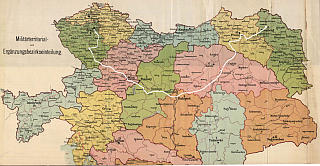
Švejk's journey is mapped on an Austria-Hungary map from 1914, showing the military districts of the
k.u.k. Heer. The entire plot of The Good Soldier Švejk is set within the territory of the former Dual Monarchy.
The Fateful Adventures of the Good Soldier Švejk (commonly known as The Good Soldier Švejk) by Jaroslav Hašek is rich in geographical
references, whether through the plot itself, in dialogues, or in the author's narrative voice. Hašek was unusually
well-travelled and had a photographic memory for geographical (and other) details. Geography mattered to him: eight
of the 27 chapter headings in the novel contain geographical names.
This website will, in due course, provide a complete overview of the novel's geographical references, from Prague in
the introduction to Klimontów in the unfinished Part Four. It includes continents, states (including defunct ones),
cities, market squares, city gates, regions, districts, towns, villages, mountains, mountain passes, oceans, lakes,
rivers, caves, channels, islands, streets, parks, and bridges.
The list is sorted according to the order in which the names appear in the novel. The chapter headings are taken from
Zenny Sadlon's recent translation (1999–2026); in most cases, these differ from Cecil Parrott's translation from 1973.
The Czech quotations are taken from the online version of The Good Soldier Švejk provided by Jaroslav Šerák and link to the relevant chapter. The
toolbar provides direct links to Wikipedia, Google Maps, Google Search, svejkmuseum.cz, and the novel online.
The names are colour-coded according to their role in the novel, as illustrated by the following examples:
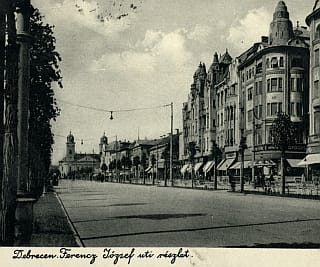
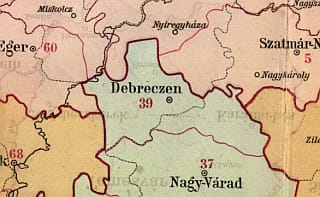
Debrecen
is mentioned in the article in Pester Lloyd after the scandal about the letter to Mrs. Etelka Kakonyi broke. It refers to the lamentable behaviour of Czech soldiers from regiment N who were stationed there.
Furthermore, deputy Béla Barabás refers to the regiment's standard at the front. What happened to it, however, we do not know, as what followed was removed by censorship before it reached the columns of Pester Lloyd.
Background
Debrecen
is the second largest city in Hungary, situated in the eastern part of the country, near the border with Romania. The number of inhabitants is currently (2022) around 200,000.
Debrecen (at the time written Debreczen) was an important garrison city for both k.u.k. Heer and Honved. In 1915, the replacement battalion of Infanterieregiment Nr. 75 was transferred here, so the city did have a Czech presence. It is not known where Infanterieregiment Nr. 39, the city's Hausregiment, was transferred to.
The description of the unnamed Czech regiment N and its standard indicates that deputy Béla Barabás has Infanterieregiment Nr. 28 in mind. This regiment actually had its standard taken away in April 1915. Their replacement battalion, however, was garrisoned in Szeged and not in Debrecen.
Turista Aratáš
Debrecen is also mentioned in the story Turista Aratáš that Hašek had published in Venkov in 1911[a]. The main protagonist, the quarrelsome tourist Sandor Aratas, was on a trip to Venice. He was a landowner from the city.
Demography
According to the 1910 census, Debrecen had 92,729 inhabitants. The judicial district was Debreczen, administratively it reported to vármegyeMáramaros.
Military
Per the recruitment districts, infantrymen from Debrecen were usually assigned to Infanterieregiment Nr. 39 (Debreczen) or Honvédinfanterieregiment Nr. 3 (Debreczen). Debrecen also housed Honvéd-Husarenregiment Nr. 2 and brigades of both infantry and cavalry.
Quote(s) from the novel
[II.4] Upozornili jsme již jednou na řádění pluku No ... v Debrecíně, jehož výtržnosti byly přetřásány i odsouzeny pešťskou sněmovnou a jehož plukovní prapor později na frontě byl - Konfiskováno
Királyhida district
is mentioned by Sopronyi Napló, where it was stated that the representative from the Királyhida district was going to raise an interpellation in the Pest Parliament regarding the scandal with Švejk and Sappeur Vodička. The representative for the district was a certain deputy Géza Savanyú.
Background
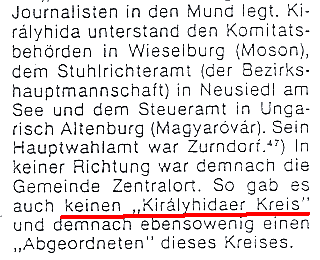
Királyhida district
(Királyhidai járás) is undoubtedly a fictional entity. There was no such district, whether electoral, judicial or administrative. The judicial district was Nezsider (now Neusiedl am See) and the political district was Moson. The electoral constituency that Királyhida belonged to was Zurány (now Zurndorf)[a]. Nor was it represented by any deputy Géza Savanyú. Its MP from 1910 to 1918 was Károly Cserny (1863-1933)[b].
Quote(s) from the novel
[II.4] Jest to známý český šovinista Lükáš, o jehož řádění bude podána interpelace naším poslancem Gézou Savanyú, který zastupuje okres királyhidský.“
Pressburg
(hun. Pozsony) was in 1915 the capital of Upper Hungary, and has since 1919 been known as Bratislava, the capital of Slovakia. At Hašek's time, more than 80 per cent of the population spoke Hungarian or German as their everyday language. Pressburg was the capital of Hungary from 1541 until 1784, and the Hungarian parliament held its sittings here until 1848. The city is located by the Danube, only a few miles from Bruck.
Featured in a play
Bratislava features in the play From Karlín to Bratislava, co-authored by Jaroslav Hašek, Emil Artur Longen and Egon Erwin Kisch. It was written towards the end of 1921.
Demography
According to the 1910 census, Pressburg had 78,200 inhabitants. The judicial district was Pozsony, administratively it reported to vármegyePozsony.
Military
Per the recruitment districts, infantrymen from Pressburg were usually assigned to Infanterieregiment Nr. 60 (Eger) or Honvédinfanterieregiment Nr. 10 (Eger). Moreover, Pozsony was an important garrison city and seat of KORPS-KO5.
Quote(s) from the novel
[II.4] „Stejně líbezně, pane nadporučíku,“ ozval se plukovník Schröder, „píše o vás též týdeník v Királyhidě a potom prešburské listy. To vás ale už nebude zajímat, poněvadž je to na jedno kopyto. Politicky dá se to odůvodnit, poněvadž my Rakušané, ať jsme Němci, nebo Češi, jsme proti Maďarům přece jen ještě hodně... Rozumíte mně, pane nadporučíku.
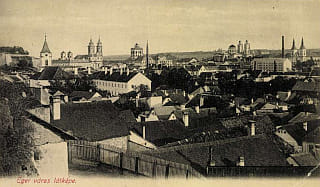
Eger
is mentioned by Oberst Schröder when he boasts to Oberleutnant Lukáš about his adventures with Hungarian ladies while attending a three-week surveying course here in his younger years.
Eger then reappears in [III.2] when there is talk of damaged material from the offensive "beyond Lwów". From this passage, it even seems that the route of the march battalion was planned through Eger, despite it not being located on the railway from Budapest to Sanok.
Apart from the geographical inconsistency, there is a time jump involved. Although the stay in Budapest explicitly takes place around the time of Italy's entry into the war on 23 May 1915, any offensive east of Lwów could only have been after 22 June, the day the city was recaptured by the Central Powers.
Background
Eger
is a town in northern Hungary, best known for its red wine and its well-preserved historical centre. At the time of writing (2023), it has around 54,000 inhabitants and is the centre of Heves vármegye (county). During the times of the Dual Monarchy, it was a garrison town, so it is conceivable that military surveying courses were held here.
Demography
According to the 1910 census, Eger had 28,052 inhabitants. The judicial district was Eger, administratively it reported to vármegyeHeves.
Military
Per the recruitment districts, infantrymen from Eger were usually assigned to Infanterieregiment Nr. 60 (Eger) or Honvédinfanterieregiment Nr. 10 (Eger).
Quote(s) from the novel
[II.4] „Neříkejte, pane nadporučíku, že jste teprve začal korespondovat. Já, když jsem byl ve vašich letech, seděl jsem v Jágru na měřických kursech tři neděle, a měl jste vidět, jak jsem ty celé tři neděle nic jiného nedělal než spal s Maďarkami. Každý den s jinou. Mladé, svobodné, starší, vdané, jak to právě přišlo, žehlil jsem tak důkladně, že když jsem se vrátil k regimentu, sotva jsem pletl nohama.
[III.1] Také se rozšiřovalo po nádraží, že u Jágru srazil se jeden sanitní vlak s nemocnými a raněnými s vlakem vezoucím dělostřelectvo.
Anastatica hierochuntica, the real rose of Jericho
Ottův slovník naučný,1889
Jericho
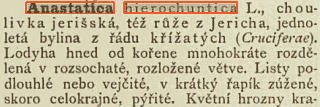
is mentioned by Švejk indirectly through the expression Rose of Jericho. The servant of painter Panuška explained to an old woman how to create a rose of Jericho. The recipe was to place a dry cowpat on a plate, water it, and then it would spring to life.
Background
Jericho
is a historic town in Palestine, commonly regarded as the oldest city in the world. It is also the city at the lowest altitude, 250 metres below sea level.
The Rose of Jericho
Rose of Jericho is a name associated with two plant species that predominantly grow in arid regions. They are also called resurrection plants as they can survive long periods of drought and spring to life when rain arrives [a].
Anastatica hierochuntica grows in the Middle East and North Africa and is also known as the "true rose of Jericho". Selaginella lepidophylla is native to North America and is also known as "the false rose of Jericho". In the context of The Good Soldier Švejk, one must, however, assume that Švejk has the former in mind.
It is assumed that the connection with Jericho is the word "resurrection", because the city was repeatedly destroyed but rose from the ashes every time.
Quote(s) from the novel
[II.4] „... potom dostaneš pár facek,“ ozval se starý sapér Vodička, „co si ten chlap všechno nevymyslí. Člověk má starosti s divisním soudem, a von chlap mizerná mně včera, když nás vedli k vejslechu, vykládal, co je to růže z Jericha.“
„To ale nebyla moje slova, to vykládal sluha malíře Panušky Matěj jedné staré bábě, když se ho ptala, jak vypadá růže z Jericha. Tak jí povídal: ,Vemte suchý kravský hovno, dejte ho na talíř, polejte vodou a vono se vám krásně zazelená, a to je růže z Jericha,“‘ bránil se Švejk, „já jsem si tu blbost nevymyslil a přeci jsme si vo něčem museli povídat, když jdeme k vejslechu. Já jsem tě chtěl, Vodičko, jen potěšit...“
Moravská Ostrava
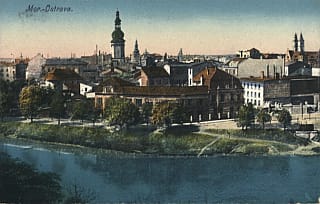
is mentioned in an anecdote by Švejk, where he illustrates the importance of never admitting to anything in court. It is also revealed that this is one of the places where Švejk worked.
Background
Moravská Ostrava
was the Moravian part of present-day Ostrava, an important industrial and mining city located in both Moravia and Silesia. Modern Ostrava was created in 1924 by merging seven municipalities, the largest of which was Moravská Ostrava itself.
There is no indication that Jaroslav Hašek ever visited Ostrava, and the city is only mentioned once more in his entire literary output[a].
Demography
According to the 1910 census, Moravská Ostrava had 36,754 inhabitants. The judicial district was okresMoravská Ostrava, administratively it reported to hejtmanstvíMoravská Ostrava.
Military
Per the recruitment districts, infantrymen from Moravská Ostrava were usually assigned to Infanterieregiment Nr. 100 (Teschen) or k.k. Landwehrinfanterieregiment Nr. 31 (Teschen).
Quote(s) from the novel
[II.4] Když jsem jednou pracoval v Mor. Ostravě, tak tam byl takovejhle případ: Jeden horník ztřískal tam inženýra mezi čtyřma vočima, takže to nikdo neviděl. A advokát, kerej ho hájil, pořád mu říkal, aby zapíral, že se mu nemůže nic stát, ale předseda senátu mu pořád klad na srdce, že přiznání je polehčující okolností, ale ten ved neustále svou, že se přiznat nemůže, tak byl osvobozenej, poněvadž dokázal svoje alibi. V ten samej den byl v Brně...“
Hamburg
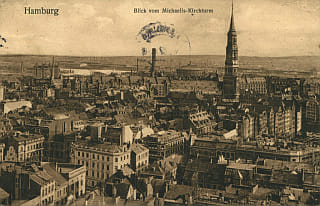
is mentioned in an anecdote by Švejk, where he explains the advantages of feigning mental deficiency. This story is about an intelligent professor of economics who claimed a tragic background and subsequently got away with desertion.
Background
Hamburg
is the second-largest city in Germany and the seventh-largest city in the European Union. The city is home to approximately 1.8 million people and has one of the largest ports in Europe. It is an important centre for trade and commerce.
Hašek and Hamburg
Hamburg is mentioned in several stories by Jaroslav Hašek, although he likely never set foot in the city. One example is Gott strafe England, where he mentions a certain merchant Feuselen who is said to have invented the propaganda slogan "God punish England" after the British had confiscated 10 sacks of coffee from him. In the same story, he mentions Spatenbierhalle and the tobacco factory J.F. Schaffer[a]. None of these three entities are known to have existed.
In other stories, Hašek mentions the city's famous zoo and animal dealer Hagenbeck.
Quote(s) from the novel
[II.4] Že jednou se probudil v Hamburku a podruhý zas v Londýně, a že nevěděl, jak se tam dostal. Otec že byl alkoholik a zemřel sebevraždou před jeho narozením, matka že byla prostitutkou a opíjela se a zemřela na delirium.
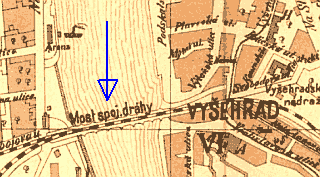
Pohled na dokončený nový vyšehradský železniční most. V pozadí Smíchov a Palackého most, 1901
Nejnovější plán král. hlav. města Prahy, Karlína, Smíchova
Vyšehrad railway bridge
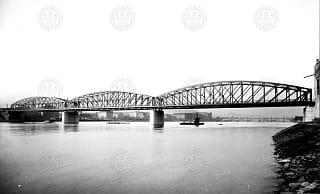
is mentioned by Švejk in his long anecdote at Hauptwache about a professor of economics who claimed to have suffered an interminable sequence of family tragedies. One of them concerned his brother, who had thrown himself off this bridge.
Background
Vyšehrad railway bridge
refers to a bridge over the Vltava by Vyšehrad. The bridge was opened in 1872, reconstructed in 1901, and connects Nusle with Smíchov. It is still (2023) in use and was recently renovated.
The bridge does not have an official name, but maps have over the years used various terms for it.
Quote(s) from the novel
[II.4] Mladší sestra že se utopila, starší že se vrhla pod vlak, bratr že skočíl z železničního mostu na Vyšehradě, dědeček že zavraždil svou ženu a polil se petrolejem a zapálil se, ...
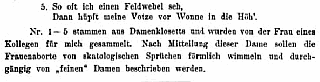
Verse from unspecified ladies toilet in Berlin, collected by F.W. Berliner.
Anthropophyteia. VII. Band, 1910.
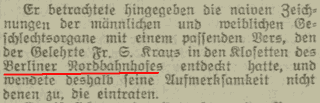
Berlin Westbahnhof
is mentioned in the description of Auditor Ruller, judge advocate at Brucker Lager, who is looking at drawings of male and female genitals, recorded at BerlinWest railway station toilets, reproduced in a book by Fr. S. Kraus entitled Forschungen zur Entwicklungsgeschichte der geschlechtlichen Moral.
Background
Berlin WestbahnhofBerlin West Railway Station
was, according to the author, a railway station in Berlin, although a station carrying this name has never existed in the city.
Studying Krauss' Anthropophyteia, the book that Hašek refers to in the novel, gives no further indication. If anything, it seems that the author composed this passage by picking fragments from volume VII, then twisted them for literary purposes. No specific railway station in Berlin has been possible to identify in Anthropophyteia[a].
Reiner's correction
Grete Reiner's translation of the novel into German provides a clue, though. Here it appears as BerlinNordbahnhof, so she presumably made an attempt to correct the author.
Nordbahnhof
This was one of the major railway stations in Berlin. Opened 1 October 1877, initially only for freight, it connected the capital to the north-eastern parts of Germany, mainly Stettin. This was probably the station at which Jaroslav Hašek and his wife arrived in December 1920, on their way from Russia to Czechoslovakia.
Until 1950, the station was, however, named Stettiner Bahnhof, so this negates the hypothesis that this was the station Reiner had in mind. On the other hand, there was a nearby smaller station called Nordbahnhof, later renamed Eberswalder Straße.
Quote(s) from the novel
[II.4] Zadíval se na reprodukci naivních kreseb mužského i ženského pohlavního ústroje s přiléhajícími verši, které objevil učenec Fr. S. Krause na záchodcích berlínského Západního nádraží, takže neobrátil pozornost na ty, kteří vstoupili.
Velké Popovice
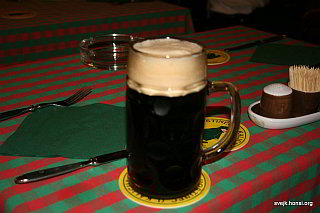
is mentioned by Švejk during the famous farewell scene in Királyhida. Sappeur Vodička asks what beer they have at U kalicha, and Švejk answers: "Velkopopovický".
Background
Velké Popovice
is a town on the southern perimeter of Prague, known for its brewery. Velkopopovický beer is reported to have been a favourite of Jaroslav Hašek. The dark variety is still served at U kalicha, as it seems to have been when Švejk frequented the pub. In contemporary Praha, U černého vola (At the Black Ox) is a popular hospoda that serves the pale variety in large quantities.
Big brewer
The brewery was established in 1871 by the businessman and politician Franz Ringhoffer (1817-1873), and in 1874 production started. The brewery was modern for its time and soon became one of the largest in Bohemia. In 1907, they ranked 4th with a production of more than 175,000 hectolitres[a]. The alternative name Kozel was used from the beginning and is still synonymous with beer from Velké Popovice.
War time production volumes
Here are some numbers which show that hop trader Wendler had every reason to be worried. The production volumes at Velké Popovice from 1913 until 1919 were (in 1000 hectolitres): 230, 199, 181, 130, 37, 25, 38[b]. These figures put the term "economic crisis" into perspective. Production did not reach pre-war volumes until 1924.
Pivovary.info
Pro velkopopovický pivovar znamenaly roky 1916 až 1918 pokles výroby až na osminu předválečného výstavu. Ekonomická ztráta však podnik vzhledem k vyšší válečné a poválečné výrobě Ringhofferovy vagónky neohrozila. Uvolnění trhu v roce 1921 umožnilo prudký nárůst výroby a již o tři roky později dosáhla produkce pivovaru 142 000 hl piva, čímž překonala nejúspěšnější roky předválečné.
Quote(s) from the novel
[II.4] Potom se vzdálili a bylo slyšet zas za hodnou chvíli za rohem z druhé řady baráků hlas Vodičky: „Švejku, Švejku, jaký mají pivo ,U kalicha’?“ A jako ozvěna ozvala se Švejkova odpověď: „Velkopopovický.“ „Já myslel, že smíchovský,“ volal z dálky sapér Vodička. „Mají tam taky holky,“ křičel Švejk. „Tedy po válce v šest hodin večer,“ křičel zezdola Vodička.




 czdeenhunn
SearchMap
czdeenhunn
SearchMap