The Good Soldier Švejk mentions numerous institutions and firms, both public and private. Until 15 September 2013, these were categorised as
'Places' on these pages. That categorisation only partly makes sense, because this type of entity cannot always be
tied to geographical coordinates in the way that cities, mountains, and rivers can. This page therefore covers
military and civilian institutions (including army units, regiments, etc.), organisations, hotels, public houses,
newspapers, and magazines.
The boundary between this page and 'Places' is not always clear-cut. Churches, for instance, rarely change location
yet are still included here. By contrast, Prague and Vienna remain in the 'Places' database because they have fixed
coordinates. Institutions, however, may move: Odvodní komise and Bendlovka are not unambiguous geographical terms,
so they are listed on this page.
The names are colour-coded according to their role in the novel, as illustrated by the following examples:
U kalicha, a location where the plot takes place.
k.u.k. Kriegsministerium, mentioned in the narrative.
Pražské úřední listy, part of a dialogue.
Stoletá kavárna, mentioned in an anecdote.
InstitutionsTaverns, military units, government institutions, societies, periodicals,
churches, monasteries. (305)
Výbor ze spisů Xenofontových, Vilém Steinmann,1880
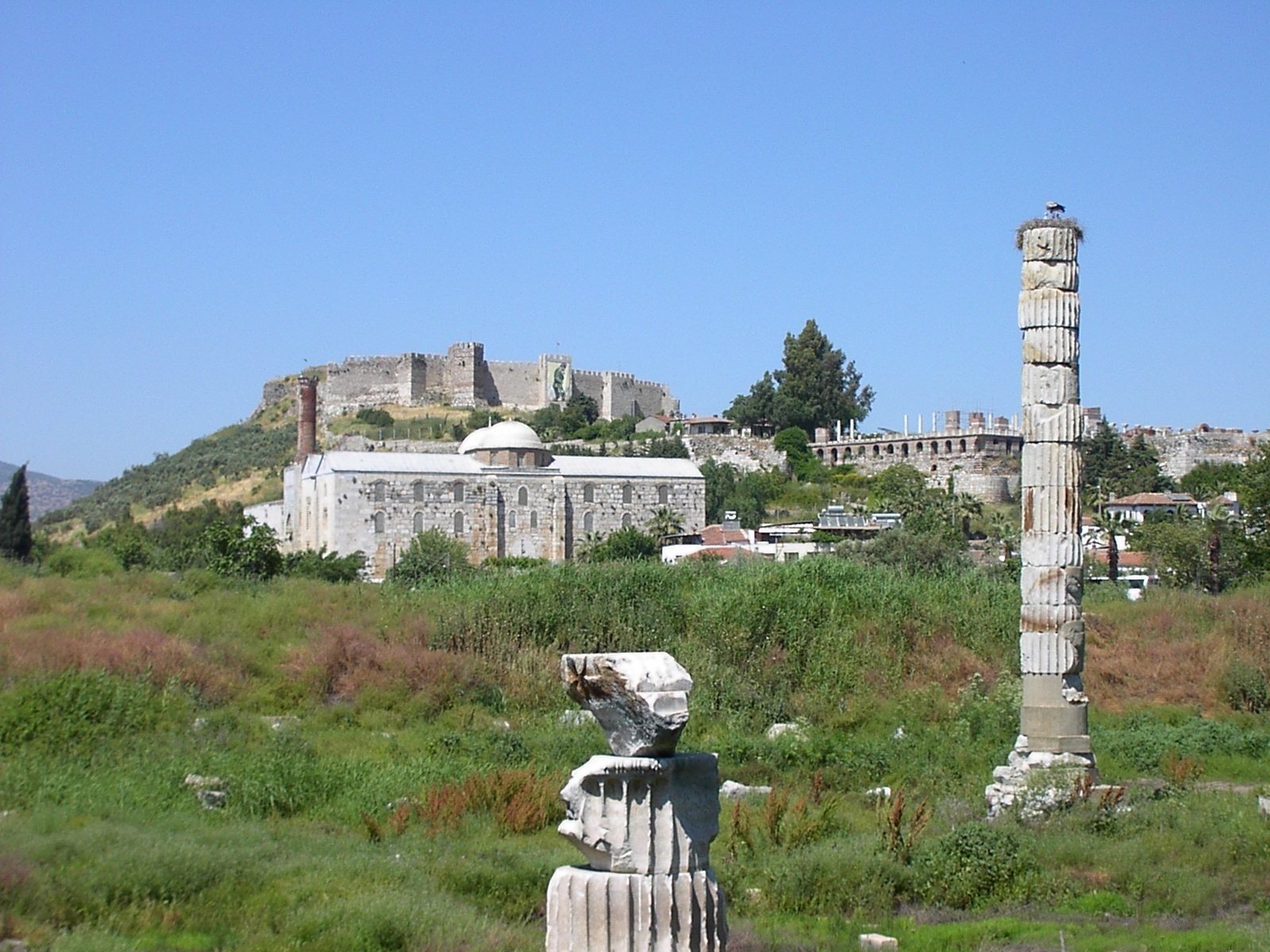
Temple of Artemis
is mentioned indirectly in the author's description of Herostratus, 'who set fire to the temple of the goddess in Ephesus'.
Background
Temple of Artemis
was a temple in Ephesus, regarded as one of the Seven Wonders of the World. It was erected in honour of the goddess Artemis. The temple was burnt down in 356 BC (see Herostratus) but was later rebuilt. Today only ruins remain.
Quote(s) from the novel
[Úvod] On nezapálil chrám bohyně v Efesu, jako to udělal ten hlupák Herostrates, aby se dostal do novin a školních čítanek.
 Norsk
 English


 czdeenno
SearchMap