Švejk's journey is mapped on an Austria-Hungary map from 1914, showing the military districts of the
k.u.k. Heer. The entire plot of The Good Soldier Švejk is set within the territory of the former Dual Monarchy.
The Fateful Adventures of the Good Soldier Švejk (commonly known as The Good Soldier Švejk) by Jaroslav Hašek is rich in geographical
references, whether through the plot itself, in dialogues, or in the author's narrative voice. Hašek was unusually
well-travelled and had a photographic memory for geographical (and other) details. Geography mattered to him: eight
of the 27 chapter headings in the novel contain geographical names.
This website will, in due course, provide a complete overview of the novel's geographical references, from Prague in
the introduction to Klimontów in the unfinished Part Four. It includes continents, states (including defunct ones),
cities, market squares, city gates, regions, districts, towns, villages, mountains, mountain passes, oceans, lakes,
rivers, caves, channels, islands, streets, parks, and bridges.
The list is sorted according to the order in which the names appear in the novel. The chapter headings are taken from
Zenny Sadlon's recent translation (1999–2026); in most cases, these differ from Cecil Parrott's translation from 1973.
The Czech quotations are taken from the online version of The Good Soldier Švejk provided by Jaroslav Šerák and link to the relevant chapter. The
toolbar provides direct links to Wikipedia, Google Maps, Google Search, svejkmuseum.cz, and the novel online.
The names are colour-coded according to their role in the novel, as illustrated by the following examples:
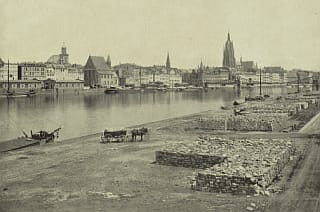
Frankfurt
(am Main) is mentioned indirectly when Oberleutnant Lukáš confronts Offiziersdiener Baloun after the latter had devoured his master's Frankfurter roast.
Background
Frankfurt
is the fifth largest city in Germany and an important centre of finance and transport. It is the location of the European Central Bank. By the time of World War I, the city had become an important industrial centre.
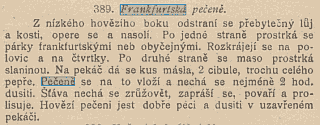
Frankfurter Braten
Frankfurter roast is a traditional dish of unclear origin and varying ingredients. It appears to be based on beef, with sausage and bacon added[a]. The term seems to have been more widespread in Austria than in Germany, and the dish still exists in Czech recipe books.
Quote(s) from the novel
[II.5] Taky jsi sežral. Dva plátky frankfurtské pečeně. A přines jsi jen půl plátku, he? Dva kousky štrudlu! Kams ho dal? Nacpal jsi se, prase mizerný, ohavný. Mluv, kam jsi dal štrudl? Že ti upad do bláta? Ty prevíte jeden. Můžeš mně ukázat to místo, kde leží v blátě?
In [III.1], the pass appears again when Švejk says that before the departure from Királyhida, they had been read two well-known army orders relating to an event where two battalions from Infanterieregiment Nr. 28 defected to the Russians, complete with officers and to the tunes of the regiment's orchestra. According to Švejk, the incident happened on 3 April 1915. One order was signed by Emperor Franz Joseph I, the other by Archduke Joseph Ferdinand.
Later in the chapter, Rechnungsfeldwebel Vaněk tells yet another story about his experiences "below Dukla".
Background
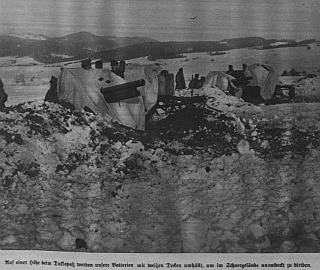
Dukla Pass
is the lowest mountain pass in the Carpathians. It is located south of Dukla in Poland and northeast of Prešov in Slovakia. The pass is strategically important and fierce fighting took place between Austro-Hungarian and Russian forces during the first winter and spring of World War I. In the first week of May 1915, the Russians were finally driven away from the area.
IR. 28 and Easter Saturday 1915
The two army orders reproduced in The Good Soldier Švejk concern the collapse of IR. 28 on 3 April 1915. The regiment lost as much as 80 per cent of its manpower, and there is no doubt that the majority surrendered without offering serious resistance. The author of The Good Soldier Švejk gives a brief explanation of the background for the army orders and even provides the correct date.
Otherwise, his version differs markedly from reality. The incident did not take place in the Dukla Pass but 30 kilometres to the west, at the front section north of Bardejov. Nor is there any evidence that two battalions with officers crossed over to the enemy to the tunes of the regiment's orchestra. That said, the total number of prisoners may have equalled two battalions, or at least two reduced battalions.
It was soon discovered that "army orders" that Hašek pulled the text from were fakes, spread as leaflets.
Quote(s) from the novel
[II.5] Účetní šikovatel si vzdychl: „Já bych byl toho náhledu, že v takové válce, jako je tahle, kdy je tolik vojska a taková dlouhá fronta, že by se spíš mohlo docílit víc jenom pořádným manévrováním nežli nějakými zoufalými ataky. Já to viděl pod Duklou při 10. marškumpačce. Tenkrát se to všechno odbylo úplně hladce, přišel rozkaz ,Nicht schießen’, a tak se nestřílelo a čekalo, až se Rusové přiblížili až k nám.
[II.5] Přišili nás konečné pod Duklu, tam nás rozflákali a my se jeli znovu zformírovat
[II.5] Dostal velkou stříbrnou medalii, přišili mu dvě hvězdičky, a kdyby ho byli později nepověsili pod Duklou, byl by už dávno cuksfírou.
[III.1] Potom Švejk počal mluvit o známých rozkazech, které jim byly přečteny před vstoupením do vlaku. Jeden byl armádní rozkaz podepsaný Františkem Josefem a druhý byl rozkaz arcivévody Josefa Ferdinanda, vrchního velitele východní armády a skupiny, kteréž oba týkaly se událostí na Dukelském průsmyku dne 3. dubna 1915, kdy přešly dva bataliony 28. pluku i s důstojníky k Rusům za zvuků plukovní kapely.
[III.1] „Jedině mým přičiněním a zásluhou,“ řekl účetní šikovatel k Balounovi, „zůstal jste buršem u pana obrlajtnanta. Měl jste být přeložen k sanitě a odnášet raněné z gefechtu. Pod Duklou šli od nás saniteráci třikrát za sebou pro jednoho raněného fähnricha, který dostal bauchschuss před drahtindernissama, a všichni tam zůstali, samý kopfschuss. Teprve čtvrtý pár ho přines, ale než ho odnesli na hilfsplatz, byl fähnrich nebožtíkem.“
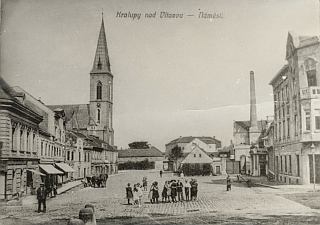
Kralupy
is an industrial town 20 km north of Prague, situated on the Vltava. Throughout the 20th century, the town grew rapidly and is best known for the chemical industry that is still operating today (2017). On 22 March 1945, the town was devastated in an Allied bombing raid.
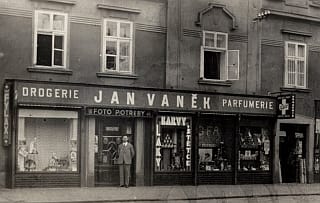
Jan Vaněk
Kralupy owes its place in The Good Soldier Švejk to Jan Vaněk, perhaps the most obvious of the real-life "prototypes" for Hašek's literary figures. He lived in Kralupy and, like his literary counterpart, he owned a chemist's shop/pharmacy. It was located on the town square and is still functioning.
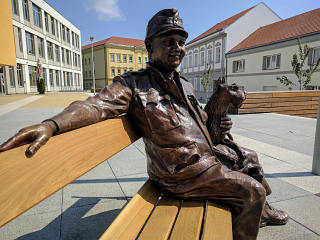
Statue
On 20 May 2017, the second statue of Švejk on Czech soil was unveiled (the first was erected in Putim in 2014). The statue is modelled after actor Rudolf Hrušinský (1920-1994), who played the good soldier in Karel Steklý's two films, from 1956 and 1957 respectively.
The pump manufacturer
A more peripheral name mentioned in the novel is pump manufacturer Jaroš, whom Hašek probably knew about from his time as editor of Svět zvířat.
Demography
According to the 1910 census, Kralupy had 5,848 inhabitants, of whom 5,805 (99 per cent) reported using Czech as their everyday language. The judicial district was okresKralupy nad Vltavou, administratively it reported to hejtmanstvíSlaný.
Per the recruitment districts, infantrymen from Kralupy were usually assigned to Infanterieregiment Nr. 28 (Prag) or k.k. Landwehrinfanterieregiment Nr. 8 (Prag).
Quote(s) from the novel
[II.5] Čímpak vy jste v civilu, pane rechnungsfeldvébl?“ Účetní šikovatel Vaněk byl tak překvapen tím familierním sousedským tónem dobrého vojáka Švejka, že nedbaje své důstojnosti, kterou velice rád ukazoval před vojáky kumpanie, odpověděl, jako by byl Švejkův podřízený: „Já jsem takto drogista Vaněk z Kralup.“
Na Perštýně
is mentioned by Švejk in his story from when he was a chemist's apprentice for Kokoška. The chemist's shop was located in this street.
Background
Na Perštýně
is a street in Staré město, Prague. In 1898, Jaroslav Hašek worked at drogerie Kokoška as an apprentice for a short period after prematurely ending his studies at the gymnasium in Žitná ulice.
Quote(s) from the novel
[II.5] „Já jsem se taky učil materialistou,“ řekl Švejk, „u nějakýho pana Kokošky na Perštýně v Praze. To byl náramnej podivín, a když jsem mu jednou vomylem ve sklepě zapálil sud benzinu a von vyhořel, tak mne vyhnal a gremium mne už nikde nepřijalo, takže jsem se kvůli pitomýmu sudu benzinu nemoh doučit. Vyrábíte také koření pro krávy?“
[II.5] „Vaněk? Ten šel do regimentskanceláře. Kdo je u telefonu? Ordonanc od 11. marškumpanie. Kdo je tam? Ordonanc od 12. maršky? Servus, kolego. Jak se jmenuji? Švejk. A ty? Braun. Nemáš příbuznýho nějakýho Brauna v Pobřežní třídě v Karlíně, kloboučníka? Že nemáš, že ho neznáš... Já ho taky neznám, já jsem jen jednou jel kolem elektrikou, tak mně ta firma padla do voka. Co je novýho? - Já nic nevím. - Kdy pojedem? - Já jsem ještě s nikým vo odjezdu nemluvil. Kam máme ject?“
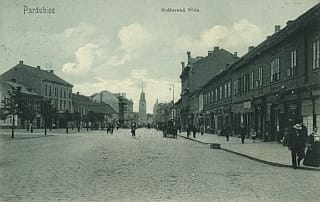
Pardubice
is mentioned because a staff sergeant had received a bribe from a landowner from Pardubice who had a son in Brucker Lager. He had also been treated to drinks all afternoon down in the town, and the alcohol had now gone to his head. He was now sitting in Kantine listening to Rechnungsfeldwebel Vaněk talking about enamel paints.
Pardubice
is a city in eastern Bohemia, and capital of the kraj of the same name. Jaroslav Hašek spent a week in quarantine here in December 1920, after returning home from Russia.
Demography
According to the 1910 census, Pardubice had 20,419 inhabitants, of whom 19,763 (96 per cent) reported using Czech as their everyday language. The judicial district was okresPardubice, administratively it reported to hejtmanstvíPardubice.
Per the recruitment districts, infantrymen from Pardubice were usually assigned to Infanterieregiment Nr. 98 (Hohenmauth) or k.k. Landwehrinfanterieregiment Nr. 30 (Hohenmauth). Pardubice hosted a military garrison, with 716 persons employed by the army in 1910. Ulanenregiment Nr. 11 was garrisoned here with staff, and so was the 9th cavalry brigade.
Quote(s) from the novel
[II.5] Štábní šikovatel byl již nemožný. Dopoledne přijel jeden statkář od Pardubic, který měl syna v lágru, a dal mu slušný úplatek a celé dopoledne ho hostil dole ve městě.
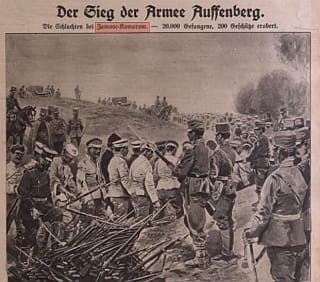
Komarów
is mentioned in the author's introduction of cook Jurajda. He cooked so well that Leutnant Dufek, who was mortally wounded at Komarów, repeatedly called out his name.
Background
Komarów
is a village by Zamość in Poland, at the time of the plot part of Russia. From 26 August to 2 September 1914, the area was the scene of a battle between 4. Armee and the Russian 5th army[a]. The forces of the Dual Monarchy emerged victorious.
Quote(s) from the novel
[II.5] Plukovník Schröder měl ho rád jako zvláštnost u regimentu, neboť která důstojnická kuchyně mohla se pochlubit kuchařem okultistou, který nazíraje do záhad života a smrti, překvapil všechny takovou dobrou svíčkovou nebo s takovým ragout, že pod Komárovem smrtelně raněný poručík Dufek volal stále po Jurajdovi.
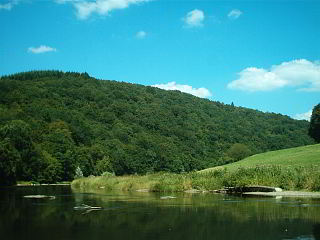
Ardennes
is mentioned by Oberst Schröder during an officers' meeting before the departure to the front. He refers to experiences from a German withdrawal through the Ardennes.
Background
Ardennes
is a forested mountain plateau divided between southeastern Belgium, northern Luxembourg, and northeastern France, bounded to the north by the rivers Meuse and Sambre. It has an area of about 11,200 square kilometres[a]. The highest point is Signal de Botrange, 694 metres above sea level. The Ardennes are sparsely populated; few cities have more than 50,000 inhabitants.
The Ardennes was the scene of heavy fighting in 1914 and the German army soon conquered most of the area. The withdrawal that Oberst Schröder refers to during the officers' meeting in 1915 could not have happened, as the Germans abandoned the area as late as 1918.
Quote(s) from the novel
[II.5] A přišlo mu to najednou k smíchu. Bylo to jako hysterický smích, kterým nakazil několik důstojníků, mezi kterými seděl, čímž vzbudil pozornost plukovníkovu, který právě přešel na zkušenosti získané při ústupu německých armád v Ardenách. Popletl si to všechno a skončil: „Pánové, to není k smíchu.“
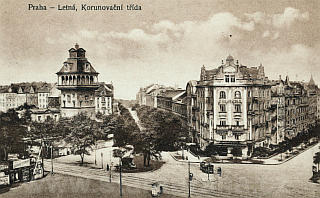
Letná
is an area of Prague, north of the city centre. Administratively, it belongs to Holešovice and Bubeneč.
Quote(s) from the novel
[II.5] Co se mý osoby týká, pane rechnungsfeldvébl, když jsem to slyšel, co vy jste vo těch outvarech povídal, tak jsem si vzpomněl na nějakýho Zátku, plynárníka; von byl na plynární stanici na Letný a rozsvěcoval a zas zhasínal lampy. Byl to osvětovej muž a chodíval po všech možnejch putykách na Letný, poněvadž mezi rozsvěcováním a zhasínáním lamp je dlouhá chvíle, a potom k ránu na plynárenské stanici vedl zrovna takový hovory jako vy, jenže ten zas říkal: "Kostka je hrana, proto je kostka hranatá." Já to slyšel na vlastní voči, když mě jeden vožralej policajt předved pro znečištění ulice vomylem místo na policejní strážnici na plynárenskou strážnici.
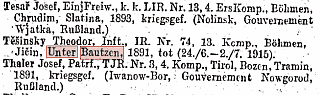
One would expect Pech, a soldier from Dolní Bousov, to serve with IR. 74 and not with Švejk's IR. 91. The exception would be if his right of domicile was in the military recruitment district Budějovice.
Kriegsministerium,5.9.1915
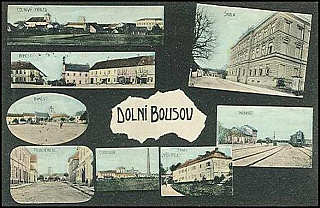
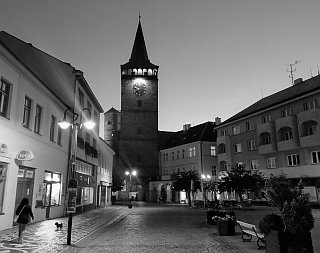
Dolní Bousov
is mentioned in the story Švejk tells about Rekrut Pech, who came from this town. In the same breath, two buildings in the town are mentioned: chrám svaté Kateřiny and the remote dwelling Valcha.
Background
Dolní Bousov
is a small town between Mladá Boleslav and Jičín, about 100 km north-east of Prague.
Pech and Otto's encyclopaedia
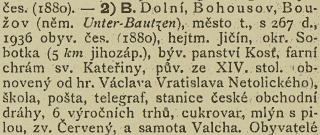
Recruit Pech's monologue about Dolní Bousov closely resembles this entry in Otto's Encyclopaedia.
Ottův slovník naučný,1891
Rekrut Pech's monologue about his origins is almost a verbatim quotation from Ottův slovník naučný, as literary scholar Antonín Měšťan demonstrated in 1983[a].
Apart from a few minor discrepancies, The Good Soldier Švejk spells out the encyclopaedia's abbreviations while retaining its factual details[b].
Diese Information, für die der Offizier dem Rekruten Pech sechs Ohrfeigen verabreichte - eine für jeden Jahrmarkt - ist ein nur unwesentlich geändertes Zitat aus dem 4. Band des Ottův slovník naučný. Antonín Měšťan, 1983, Realien und Pseudorealien in Hašek's "Švejk"
Demography
According to the 1910 census, Dolní Bousov had 1,774 inhabitants, of whom 1,774 (100 per cent) reported using Czech as their everyday language. The judicial district was okresSobotka, administratively it reported to hejtmanstvíJičín.
Per the recruitment districts, infantrymen from Dolní Bousov were usually assigned to Infanterieregiment Nr. 74 (Jičin) or k.k. Landwehrinfanterieregiment Nr. 11 (Jičin).
Quote(s) from the novel
[II.5] Odkud jste, Pechu?’ Pech byl inteligentní člověk a vodpověděl: ,Dolní Bousov, Unter Bautzen, 267 domů, 1936 obyvatelů českých, hejtmanství Jičín, okres Sobotka, bývalé panství Kosť, farní chrám svaté Kateřiny ze 14. století, obnovený hrabětem Václavem Vratislavem Netolickým, škola, pošta, telegraf, stanice české obchodní dráhy, cukrovar, mlýn s pilou, samota Valcha, šest výročních trhů.’
[II.5] V kancelářích byla tenkrát taková veselá pakáž, tak napsala, že jde k batalionsraportu kvůli výročním trhům v Dolním Bousově. Batalionskomandantem byl major Rohell. ,Also, was gibt's?` otázal se Pecha a ten spustil: ,Poslušné hlásím, pane majore, že v Dolním Bousově je šest výročních trhů: Jak na něho major Rohell zařval, zadupal a hned ho dal odvést na magorku do vojenskýho špitálu, vod tý doby byl z Pecha nejhorší voják, samej trest "
Hejtmanství Jičín
is mentioned in Rekrut Pech's monologue in response to Leutnant Moc. His hometown, Dolní Bousov, was located in this district.
Background
Hejtmanství Jičín
was an administrative district centred on Jičín. It consisted of okres Jičín, Libáň and Sobotka.
Pech and Otto's encyclopaedia
Recruit Pech's monologue about Dolní Bousov closely resembles this entry in Otto's Encyclopaedia.
Ottův slovník naučný,1891
Rekrut Pech's monologue about his origins is almost a verbatim quotation from Ottův slovník naučný, as literary scholar Antonín Měšťan demonstrated in 1983[a].
Apart from a few minor discrepancies, The Good Soldier Švejk spells out the encyclopaedia's abbreviations while retaining its factual details[b].
Diese Information, für die der Offizier dem Rekruten Pech sechs Ohrfeigen verabreichte - eine für jeden Jahrmarkt - ist ein nur unwesentlich geändertes Zitat aus dem 4. Band des Ottův slovník naučný. Antonín Měšťan, 1983, Realien und Pseudorealien in Hašek's "Švejk"
Demography
According to the 1910 census, hejtmanství Jičín had 69,166 inhabitants, of whom 68,476 (99 per cent) reported using Czech as their everyday language.
Per the recruitment districts, infantrymen from hejtmanství Jičín were usually assigned to Infanterieregiment Nr. 74 (Jičin) or k.k. Landwehrinfanterieregiment Nr. 11 (Jičin).
Quote(s) from the novel
[II.5] Dolní Bousov, Unter Bautzen, 267 domů, 1936 obyvatelů českých, hejtmanstv Jičín, okres Sobotka, bývalé panství Kosť, farní chrám svaté Kateřiny ze 14. století, obnovený hrabětem Václavem Vratislavem Netolickým, škola, pošta, telegraf, stanice české obchodní dráhy, cukrovar, mlýn s pilou, samota Valcha, šest výročních trhů.’
Okres Sobotka
is mentioned in Rekrut Pech's monologue about his home town, Dolní Bousov, which was located in okres Sobotka.
Background
Okres Sobotka
was a judicial district in Jičín, centred around the town of Sobotka. It consisted of 37 communities, where Sobotka and Dolní Bousov were by far the largest. This okres stood out in the sense that in the 1910 census, every single inhabitant registered Czech as their everyday language!
Pech and Otto's encyclopaedia
Recruit Pech's monologue about Dolní Bousov closely resembles this entry in Otto's Encyclopaedia.
Ottův slovník naučný,1891
Rekrut Pech's monologue about his origins is almost a verbatim quotation from Ottův slovník naučný, as literary scholar Antonín Měšťan demonstrated in 1983[a].
Apart from a few minor discrepancies, The Good Soldier Švejk spells out the encyclopaedia's abbreviations while retaining its factual details[b].
Diese Information, für die der Offizier dem Rekruten Pech sechs Ohrfeigen verabreichte - eine für jeden Jahrmarkt - ist ein nur unwesentlich geändertes Zitat aus dem 4. Band des Ottův slovník naučný. Antonín Měšťan, 1983, Realien und Pseudorealien in Hašek's "Švejk"
Demography
According to the 1910 census, okres Sobotka had 15,623 inhabitants, of whom 15,623 (100 per cent) reported using Czech as their everyday language. Administratively it reported to hejtmanstvíJičín.
Per the recruitment districts, infantrymen from okres Sobotka were usually assigned to Infanterieregiment Nr. 74 (Jičin) or k.k. Landwehrinfanterieregiment Nr. 11 (Jičin).
Quote(s) from the novel
[II.5] Dolní Bousov, Unter Bautzen, 267 domů, 1936 obyvatelů českých, hejtmanství Jičín, okresSobotka, bývalé panství Kosť, farní chrám svaté Kateřiny ze 14. století, obnovený hrabětem Václavem Vratislavem Netolickým, škola, pošta, telegraf, stanice české obchodní dráhy, cukrovar, mlýn s pilou, samota Valcha, šest výročních trhů.
Kosť
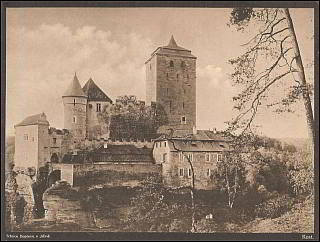
(now Kost) is a former noble estate centred on the Gothic castle of the same name near Sobotka and Dolní Bousov.
Pech and Otto's encyclopaedia
Recruit Pech's monologue about Dolní Bousov closely resembles this entry in Otto's Encyclopaedia.
Ottův slovník naučný,1891
Rekrut Pech's monologue about his origins is almost a verbatim quotation from Ottův slovník naučný, as literary scholar Antonín Měšťan demonstrated in 1983[a].
Apart from a few minor discrepancies, The Good Soldier Švejk spells out the encyclopaedia's abbreviations while retaining its factual details[b].
Diese Information, für die der Offizier dem Rekruten Pech sechs Ohrfeigen verabreichte - eine für jeden Jahrmarkt - ist ein nur unwesentlich geändertes Zitat aus dem 4. Band des Ottův slovník naučný. Antonín Měšťan, 1983, Realien und Pseudorealien in Hašek's "Švejk"
Quote(s) from the novel
[II.5] Dolní Bousov, Unter Bautzen, 267 domů, 1936 obyvatelů českých, hejtmanství Jičín, okres Sobotka, bývalé panství Kosť, farní chrám svaté Kateřiny ze 14. století, obnovený hrabětem Václavem Vratislavem Netolickým, škola, pošta, telegraf, stanice české obchodní dráhy, cukrovar, mlýn s pilou, samota Valcha, šest výročních trhů.’
Bug
appears in the narrative when Oberst Schröder is about to show the officers the route to the front (Sokal by the Bug), but puts his finger in a pile of excrement with which a tomcat has messed up the battlefield map.
Background
Bug
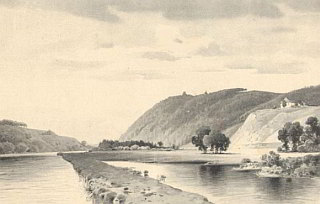
(ukr. Буг - Buh) is a river in Ukraine, Belarus, and Poland that flows into the Narew in Poland. The river is also called the Western Bug to distinguish it from the Southern Bug, a river further east in Ukraine that flows into the Black Sea.
At the front
In the summer of 1915, the river formed the front line for a time. Infanterieregiment Nr. 91 with Jaroslav Hašek was stationed at various locations along the Bug from 16 July to 27 August 1915. They first reached the river at Kamionka Strumiłowa, marched north towards Sokal on the 20th, where they crossed the river for the first time. After the Battle of Sokal (25 July - 20 July), they were deployed as a reserve at Żdżary, a now extinct village 15 km north of Sokal.
Shifting events
This is one of the first examples in The Good Soldier Švejk of how the author moved events in time. At this stage, the plot took place in Bruck, so Švejk's unit would not have known that they were destined for Sokal. The order to go there was given on 20 July 1915, only three days before they were deployed in the battles at Sokal. By then, they were already in position by the Bug, but further south, at Kamionka Strumiłowa.
Quote(s) from the novel
[II.5] „Odtud, pánové, k Sokalu na Bug,“ řekl plukovník Schröder věštecky a posunul ukazováček po paměti ke Karpatům, přičemž zabořil jej do jedné z těch hromádek, jak se kocour staral udělat mapu bojiště plastickou. „Was ist das, meine Herren?“ otázal se s údivem, když se mu cosi nalepilo na prst. „Wahrscheinlich Katzendreck, Herr Oberst,“ odpověděl za všechny velice zdvořile hejtman Ságner.
Schloss Prugg
is mentioned indirectly by Gefreiter Peroutka when he relates that he went to look at Graf Harrach's greenhouse.
Background
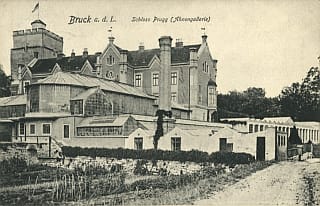
Schloss Prugg
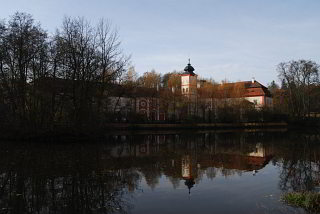
is a palace in Bruck which, since 1625, has belonged to the Harrach noble family. The mentioned greenhouse was destroyed during fighting at the end of World War II[a].
Quote(s) from the novel
[II.5] Vymlouval se, že chtěl před odjezdem prohlédnout známý skleník hraběte Harrachau Brucku a na zpáteční cestě že zabloudil, a teprve ráno celý unavený že dorazil k „Bílé růži“. (Zatím spal s Růženkou od „Bílé růže“.)
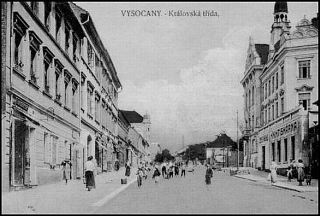
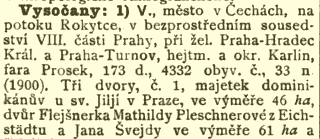
Vysočany
is mentioned in the anecdote involving Eduard Eduard Doubrava who Švejk met on a tram from here to Prague and mistook for Josef Novotný from Dražov, a man who had shot his wife.
Vysočany reappears when Švejk talks in his sleep after emptying the bottle of 'cognac' in Humenné.
Background
Vysočany
is an urban district in eastern Prague, neighbouring Žižkov and Libeň, administratively part of Prague 9. From 1902 until 1922, it was a separate town.
The tram
The tram (elektrika) from Vysočany to Prague mentioned by Švejk was opened in 1896 as a private enterprise owned by the industrialist František Křižík. Its total length was 7.7 km [a].
Demography
According to the 1910 census, Vysočany had 6,896 inhabitants, of whom 6,743 (97 per cent) reported using Czech as their everyday language. The judicial district was okresKarlín, administratively it reported to hejtmanstvíKarlín.
Per the recruitment districts, infantrymen from Vysočany were usually assigned to Infanterieregiment Nr. 28 (Prag) or k.k. Landwehrinfanterieregiment Nr. 8 (Prag).
Quote(s) from the novel
[II.5] Někdo je vám nedůtklivý až hrůza,“ pokračoval Švejk, zabořuje se opět ve vzpomínky. „Jednou jsem jel z Vysočanelektrikou do Prahy a v Libni k nám přised nějakej pan Novotný.
Literature
Vysočany, Ottův slovník naučnýDíl 27. Vůz – Żyżkowski,1908
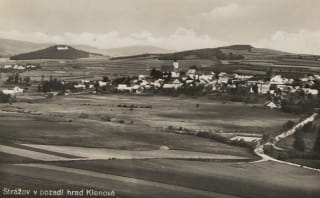
Strážov figured in the editions of Švejk that were published before 1950. Here from 1922.
Strážov is not mentioned in post World War II Czech editions of The Good Soldier Švejk, an omission that propagated to the two most recent translations into English. In these editions the place is replaced with Dražov.
Strážov
is part of the anecdote about Eduard Doubrava, a Czech-American whom Švejk confused with Josef Novotný. If this anecdote is correctly interpreted, Strážov is actually Švejk's birthplace.
Background
Strážov
is a small town in Šumava located in okresKlatovy. The historic town centre is well preserved and is protected as an urban monument zone.
Demography
According to the 1910 census, Strážov had 1,522 inhabitants, of whom 1,522 (100 per cent) reported using Czech as their everyday language. The judicial district was okresKlatovy, administratively it reported to hejtmanstvíKlatovy.
Per the recruitment districts, infantrymen from Strážov were usually assigned to Infanterieregiment Nr. 11 (Pisek) or k.k. Landwehrinfanterieregiment Nr. 28 (Pisek). NB! Verlustliste (the casualty list) for k.k. Landwehr reveals that soldiers from Strážov also served in k.k. Landwehrinfanterieregiment Nr. 7.
Quote(s) from the novel
[II.5] Někdo je vám nedůtklivý až hrůza,“ pokračoval Švejk, zabořuje se opět ve vzpomínky. „Jednou jsem jel z Vysočan elektrikou do Prahy a v Libni k nám přised nějakej pan Novotný. Jakmile jsem ho poznal, šel jsem k němu na plošinu a dal jsem se s ním do hovoru, že jsme oba z Strážova.
In pre World War II Czech editions of The Good Soldier Švejk, the first instance of Dražov is called Strážov. Hašek's inconsistency was noted by the editors who decided to standardise the name to Dražov in later editions, a change that has been reflected in subsequent translations. In the German translation by Grete Reiner from 1926 the opposite approach was chosen. Here the name Strážov (Ger. Drosau) replaces Dražov (Ger. Dražow).
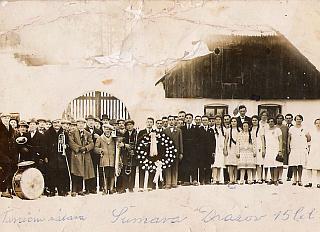
Dražov
forms part of the anecdote about Eduard Doubrava, a Czech-American whom Švejk confused with Josef Novotný. If this anecdote is correctly interpreted, Dražov (or Strážov) is in fact the birthplace of Švejk.
Background
Dražov
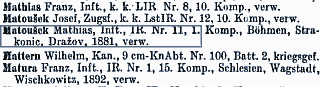
refers to Drážov near Strakonice, called Dražov until 1960. The village, however, was not in the recruitment district of Švejk's regiment (IR. 91), but rather in that of Infanterieregiment Nr. 11, the neighbouring regiment from Písek.
One should not, however, attach too much importance to the connection between Švejk's birthplace and the regiment in which he served. It was the Heimatrecht that determined allocation to military units, and this was in many cases linked to the soldier's father (examples include Jaroslav Hašek and Zdeněk Matěj Kuděj) or even grandfather (see Hans Bigler).
Novotnýs in Dražov
A family named Novotný actually lived in Dražov in 1910, and one of them was Josef! He was born on 16 February 1891, the son of Matěj and Kateřina, and lived at Dražov čp. 7[a]. Whether Hašek knew of or was aware of this person is, however, a matter of speculation.
Demography
According to the 1910 census, Dražov had 239 inhabitants, of whom 239 (100 per cent) reported using Czech as their everyday language. The judicial district was okresVodňany, administratively it reported to hejtmanstvíStrakonice. The parish was Dobrž, the post office located in Čestice.
Per the recruitment districts, infantrymen from Dražov were usually assigned to Infanterieregiment Nr. 11 (Pisek) or k.k. Landwehrinfanterieregiment Nr. 28 (Pisek).
Quote(s) from the novel
[II.5] Někdo je vám nedůtklivý až hrůza,“ pokračoval Švejk, zabořuje se opět ve vzpomínky. „Jednou jsem jel z Vysočan elektrikou do Prahy a v Libni k nám přised nějakej pan Novotný. Jakmile jsem ho poznal, šel jsem k němu na plošinu a dal jsem se s ním do hovoru, že jsme oba z Strážova.
[II.5] Tak jsem mu ještě řekl bližší podrobnosti, že v Dražově byli dva Novotní, Tonda a Josef. On že je ten Josef, že mně psali o něm z Dražova, že postřelil svou ženu, když ho kárala z pití.
Montgomery
forms part of the story of the Czech emigrant Eduard Doubrava, who was back home visiting his relatives when Švejk mistook him for his old acquaintance Josef Novotný from Dražov.
Background
Montgomery
is the name of almost 20 places in the United States, the best known nowadays being the capital of Alabama.
Minnesota
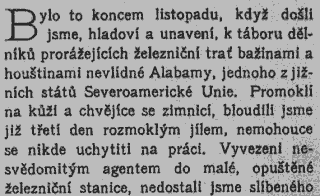
Sergey Soloukh, however, points out that Montgomery in Minnesota has a strong Czech connection, so it is quite likely this is the place the author had in mind. Zenny Sadlon adds that after World War I many Czechs returned to their homeland for various reasons, and that Hašek might have heard about Montgomery from these people.
Kuděj
The answer might even be found in the writings of his friend Zdeněk Matěj Kuděj, who spent three years in the United States before he met Jaroslav Hašek. In the story "Bídné dny" (Miserable Days) (1911) he wrote that he spent a short while working on railway construction in Alabama, but there is no direct mention of Montgomery. He also visited Minnesota, so the connection is not clear.
Quote(s) from the novel
[II.5] Tak nás vysadili, vodvedli a na komisařství se ukázalo, že byl proto tak nedůtklivý, poněvadž vůbec se nejmenoval Josef Novotný, ale Eduard Doubrava a byl z Montgomery v Americe a zde byl navštívit příbuzný, ze kterých pocházela jeho rodina.“
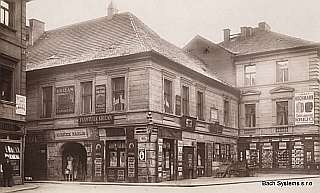
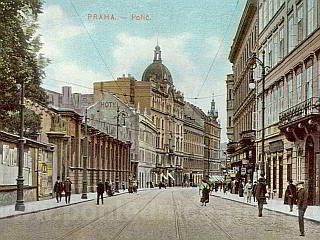
Kol. 1910 - Pohled do ulice Na Poříčí od Těšnova. Zprava domy čp. 1059 na nároží ulic Na Poříčí a Těšnov, čp. 1757, čp. 1060, čp. 1061... na Novém Městě.
Poříčí
is mentioned in Švejk's anecdote about Šic. This is where the pious soldier came from.
Background
Poříčí
was, around 1900 (in some variation), the name of 18 places in the Czech lands[a], but here Švejk probably refers to the loosely defined area Poříčí in Prague II. It literally means Riverside and is located between Staré město and Florenc, stretching along the southern bank of the Vltava.
The restaurant Kuklík and the former railway station Severozápadní nádraží are the locations in Poříčí that are explicitly mentioned in The Good Soldier Švejk.
Quote(s) from the novel
[II.5] Sloužil se mnou nějakej poříckej Šic, hodnej člověk, ale nábožnej a bojácnej. Ten si představoval, že manévry jsou něco hroznýho, že lidi na nich padají žízní a saniteráci že to sbírají jako padavky na marši.
Mníšek
is mentioned in Švejk's anecdote about Šic. They were here together during some manoeuvres.
Background
Mníšek
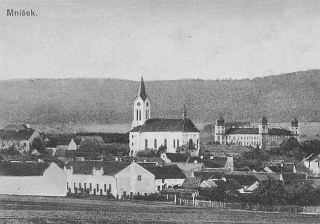
is a small town in the district of Prague, 25 km south-west of the Czech capital.
Demography
According to the 1910 census, Mníšek had 1,218 inhabitants, of whom 1,208 (99 per cent) reported using Czech as their everyday language. The judicial district was okresZbraslav, administratively it reported to hejtmanstvíSmíchov.
Per the recruitment districts, infantrymen from Mníšek were usually assigned to Infanterieregiment Nr. 28 (Prag) or k.k. Landwehrinfanterieregiment Nr. 8 (Prag).
Quote(s) from the novel
[II.5] Ten si představoval, že manévry jsou něco hroznýho, že lidi na nich padají žízní a saniteráci že to sbírají jako padavky na marši. Proto pil do zásoby, a když jsme vyrazili na manévry z kasáren a přišli k Mníšku, tak říkal: ,Já to, hoši, nevydržím, mě může zachránit jen sám pán bůh.’
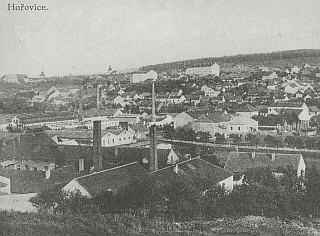
Hořovice
forms part of the story of Šic. Švejk's regiment had a rest here during their manoeuvres.
Background
Hořovice
is a town in central Bohemia, midway between Plzeň and Prague. In 2025 it has around 8,100 inhabitants. Hořovice was the hometown of painter Panuška.
Military exercises
Hořovice has, as far as is known, not been the site of Kaisermanövern, but there were smaller military manoeuvres in the area. From 20.8 to 5 September 1908 the k.k. Landwehr and the artillery exercised here[a].
Demography
According to the 1910 census, Hořovice had 4,017 inhabitants, of whom 4,007 (99 per cent) reported using Czech as their everyday language. The judicial district was okresHořovice, administratively it reported to hejtmanstvíHořovice.
Per the recruitment districts, infantrymen from Hořovice were usually assigned to Infanterieregiment Nr. 88 (Beraun) or k.k. Landwehrinfanterieregiment Nr. 8 (Prag).
Quote(s) from the novel
[II.5] Potom jsme přišli k Hořovicům a tam jsme měli dva dny rast, poněvadž to byla nějaká mejlka a my jsme šli tak rychle kupředu, že bychom byli s ostatníma regimentama, který šly s námi po flíglech, zajali celej nepřátelskej štáb, což by byla bejvala vostuda, poněvadž náš armádní sbor měl to prosrat a nepřítel vyhrát, poněvadž u nepřátel bylo jedno utahaný arciknížátko.
[II.5] Tak ten Šic proved tohle: Když jsme lágrovali, sebral se a šel si něco koupit do nějaký vesnice za Hořovicema a vracel se k polednímu do lágru.
Prácheňsko
was, until 1850, an administrative district in South Bohemia. The centre was Písek, but most of the region lay to the west and encompassed parts of Šumava. The major part of Švejk's anabasis took place within this area. Some translations imprecisely interpret it as the district around Prachatice (German - 1926, Danish - 1930).
Quote(s) from the novel
[II.5] Kde jsme lágrovali, tam vyhrával, až jsme přišli na Práchensko, leželi jsme v Drahenicích a von všechno sakumpak prohrál. Když jsme ráno vyrukovali, tak na hrušce u cesty visel svatej Jan Nepomuckej oběšenej. Tak, to je ta anekdota, a teď zas zavěsím sluchátko.“
Drahenice
forms part of the story of Šic. It was here that, in disappointment, he hung the statue of Jan Nepomucký that he had stolen near Hořovice.
Background
Drahenice
is a village in central Bohemia, in the district of Příbram. In 2025 the number of inhabitants is 156. Švejk was correct when he stated that Drahenice is in the historical region of Prácheňsko, as it is located just within its borders.
Demography
According to the 1910 census, Drahenice had 520 inhabitants, of whom 519 (99 per cent) reported using Czech as their everyday language. The judicial district was okresBřeznice, administratively it reported to hejtmanstvíBlatná.
Per the recruitment districts, infantrymen from Drahenice were usually assigned to Infanterieregiment Nr. 11 (Pisek) or k.k. Landwehrinfanterieregiment Nr. 7 (Pilsen).
Quote(s) from the novel
[II.5] Potom s ním sv. Jan Nepomuckej spal na slámě, nosil ho s sebou na marších v teleti a měl velký štěstí v kartách. Kde jsme lágrovali, tam vyhrával, až jsme přišli na Práchensko, leželi jsme v Drahenicích a von všechno sakumpak prohrál. Když jsme ráno vyrukovali, tak na hrušce u cesty visel svatej Jan Nepomuckej oběšenej. Tak, to je ta anekdota, a teď zas zavěsím sluchátko.“
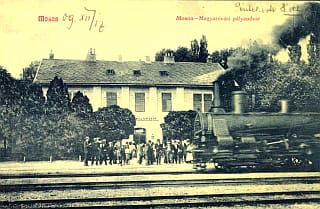
Moson is mentioned 4 times in The Good Soldier Švejk.
Moson
is first mentioned in a coded telegram that Lukás received from the regimental staff about the route to the Galician border.
In the next chapter, Moson railway station was the first stop after the march battalion's departure from Királyhida. It was only a brief stay; the only description is of a singing soldier from Kašperské Hory who is told to be quiet as follows: "Halt Maul du Elender". The author also reveals that it was already late at night and that the soldiers were not allowed to leave the train.
Background
Moson
is the former name of a city in Hungary, near the borders with Austria and Slovakia. It is situated about 50 kilometres east of Bruck an der Leitha. In 1939 it was joined with neighbouring Magyaróvár to become Mosonmagyaróvár. The river Lajta (Leitha) flows through it.
The city had (and has) a railway station, church, synagogue, and post office. The estate owner was Archduke Friedrich and the majority of the inhabitants stated that they used German in everyday speech[a].
Hašek's march battalion
On 30 June 1915 at 8:15 p.m. Jaroslav Hašek's XII. Marschbataillon left Királyhida for the front in Galicia[b]. Thus, the information in The Good Soldier Švejk that the soldiers arrived in Moson late in the evening is evidently based on Hašek's own experiences.
Demography
According to the 1910 census, Moson had 6,258 inhabitants. The judicial district was Magyaróvár, administratively it reported to vármegyeMoson.
Per the recruitment districts, infantrymen from Moson were usually assigned to Infanterieregiment Nr. 76 (Sopron) or Honvédinfanterieregiment Nr. 13 (Pozsony).
Quote(s) from the novel
[II.5] V tu dobu nadporučík Lukáš studoval ve své komnatě právě doručené jemu od štábu pluku šifry s poučením, jak je luštit, a současně sekretní šifrovaný rozkaz o směru, kterým se bude ubírat maršbatalion na haličské hranice (první etapa).
Luště tyto šifry povzdechl si nadporučík Lukáš: „Der Teufel soll das buserieren.“
[III.1] Měl přitom velice nadšenou řeč a bylo znát, že bral materiál z vojenských kalendářů. Byla to taková dojemná řeč, že když ujížděli na Mošon, Švejk, který byl pohromadě ve vagónu s Vaňkem v improvizované kanceláři, vzpomněl si na ten proslov a řekl účetnímu šikovateli: "To bude moc fajn, jak povídal ten feldkurát, až den se skloní k večeru a slunce se svýma zlatejma paprskama zapadne za hory a na bojišti bude slyšet, jak von říkal, ten poslední dech umírajících, hejkot kleslých koní a sténání raněných mužů a nářek vobyvatelstva, když mu hořejí chalupy nad hlavou. Já mám moc rád, když tak lidi blbnou na kvadrát."
[III.1] Vlak zastavil se na staniciMošon. Byl již večer a nikoho nepouštěli z vagonů. Když se hnuli, ozval se z jednoho vagonu silný hlas, jako by chtěl přehlušit rachocení vlaku. Nějaký voják z Kašperských Hor v nábožné náladě večera opěval hrozným řevem tichou noc, která se blížila k uherským rovinám:
Gute Nacht! Gute Nacht!
Allen Müden sei’s gebracht.
Neigt der Tag stille zur Ende,
ruhen alle fleiß’gen Hände,
bis der Morgen ist erwacht.
Gute Nacht! Gute Nacht!
„Halt Maul, du Elender,“ přerušil někdo sentimentálního zpěváka, který umlkl. Stáhli ho od okna.
[III.1] Potom došel Matušič k hejtmanovi Ságnerovi a oznámil, že
se s kadetem Bieglerem dějí podivné věcí. "Není to asi po tom koňaku," řekl, "mohla by to být spíš
cholera. Kadet Biegler pil všude ve stanicích vodu. V Mošoni jsem ho
viděl, že se..."
Literature
Mošon, Ottův slovník naučnýDíl 17. Median – Navarrete,1901[a]
From Jan Vaněk's diary it transpires that the transport to the front went through Győr.
Válečný deník Jana Vaňka,2014
Győr is mentioned 8 times in The Good Soldier Švejk.
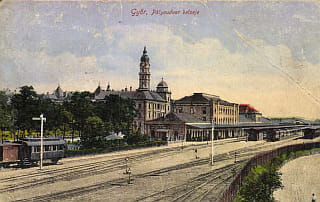
Győr
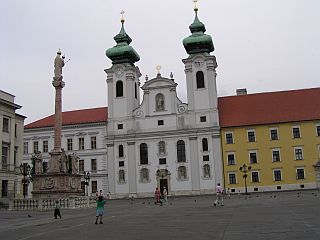
is the scene of several incidents when the train with the march battalion makes a stop there. The first important event is the conversation between Oberleutnant Lukáš and Švejk, where it is revealed how the two volumes of Ludwig Ganghofer's novel became mixed up. Švejk is told that he has done something so utterly awful that he will not even be allowed to know about it.
Then Hauptmann Ságner takes his revenge on the zealous Kadett Biegler when he catches him with some notes listing the books he plans to write on warfare. He titles himself k.u.k. Offizier, which makes him an easy match for Ságner. Crushed and humiliated, Biegler throws the notes in the toilet and gets drunk. This has disastrous consequences on the train onwards to Budapest.
One of the most macabre scenes in the novel is when a train with soldiers from Infanterieregiment Nr. 4 passes and a soldier falls off it and impales himself on a point lever. This incident illustrates the cynical traits in Švejk's character.
Background
Győr
is one of the seven regional centres of Hungary and is situated between Vienna and Budapest, near the Danube. It is the sixth largest city in the country, with around 130,000 inhabitants.
Hašek's march battalion
On 30 June 1915 at 8:15 p.m. Jaroslav Hašek's XII. Marschbataillon left Királyhida for the front in Galicia, and Jan Vaněk confirms that they travelled through Győr [b]. Thus, it must be assumed that any stay here happened late at night.
Demography
According to the 1910 census, Győr had 44,300 inhabitants. The judicial district was Győr, administratively it reported to vármegyeGyőr.
Per the recruitment districts, infantrymen from Győr were usually assigned to Infanterieregiment Nr. 19 (Győr) or Honvédinfanterieregiment Nr. 31 (Veszprém).
Quote(s) from the novel
[II.5] V tu dobu nadporučík Lukáš studoval ve své komnatě právě doručené jemu od štábu pluku šifry s poučením, jak je luštit, a současně sekretní šifrovaný rozkaz o směru, kterým se bude ubírat maršbatalion na haličské hranice (první etapa).
Luště tyto šifry povzdechl si nadporučík Lukáš: „Der Teufel soll das buserieren.“
[III.1] Hejtman Ságner mezitím počal ze zoufalství číst nešťastnou knihu Hříchy otců, a když vlak stanul na nádraží v Rábu, sklapl přečtené stránky a poznamenal: „Tenhle Ludwig Ganghofer nepíše špatně.“ Nadporučík Lukáš první vyřítil se, ze štábního vagonu a šel k vagonu, kde nalézal se Švejk.
Literature
Ráb, Ottův slovník naučnýDíl 21. R (Ř) – Rozkoš,1904
The city is mentioned again in [II.5]. According to staff plans, the train with Švejk's march battalion should pass through it, but the plot has no further mention of it.
Background
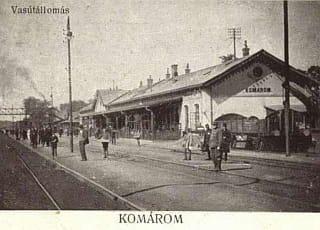
Komárom
was, until 1920, a Hungarian town on both sides of the Danube, between Pressburg and Budapest, now split between Hungary and Slovakia. The station is located on the Hungarian bank, so this is where Švejk's march battalion would have passed through.
Hašek's march battalion
Večerní České Slovo,12.9.1924
On 30 June 1915 at 8:15 p.m. Jaroslav Hašek's XII. Marschbataillon left Királyhida for the front in Galicia[a]. Thus, they probably passed Komárom at dawn the next day. According to the poem Cestou na bojiště (The Road to the Battlefield), they arrived in Pest in the morning[b], just like in The Good Soldier Švejk.
Cestou na bojiští
Když nad Dunajem rozbřesklo se ráno,
my k Pešti drkotali přes Komárno
a v Pešti potom bez vši velké slávy,
my napili se trochu černé kávy
a že tak brzo nebude snad mír,
my soudili už z toho,
že nám k tomu dali ementálský sýr.
Také jsme shledávali k svému bolu,
že tam prodávali vše bez alkoholu.
Demography
According to the 1910 census, Komárom had 22,337 inhabitants. The judicial district was Komárom, administratively it reported to vármegyeKomárom.
Per the recruitment districts, infantrymen from Komárom were usually assigned to Infanterieregiment Nr. 12 (Komárom) or Honvédinfanterieregiment Nr. 31 (Veszprém).
Quote(s) from the novel
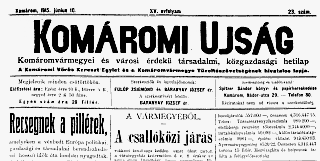
[II.4] Rozumíte mně, pane nadporučíku. Je v tom jistá tendence. Spíš by snad vás zajímal článek v ,Komárenském večerníku’, kde se o vás tvrdí, že jste se pokoušel znásilnit paní Kakonyiovou přímo v jídelně při obědě u přítomnosti jejího manžela, kterého jste ohrožoval šavlí a nutil ho, aby zacpal ručníkem ústa své manželky, aby nekřičela. To je poslední zpráva o vás, pane nadporučíku.“
[II.5] V tu dobu nadporučík Lukáš studoval ve své komnatě právě doručené jemu od štábu pluku šifry s poučením, jak je luštit, a současně sekretní šifrovaný rozkaz o směru, kterým se bude ubírat maršbatalion na haličské hranice (první etapa).
 English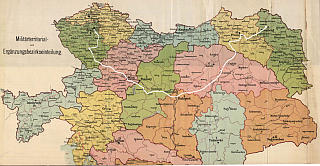


 czdeennnno
SearchMap
czdeennnno
SearchMap