


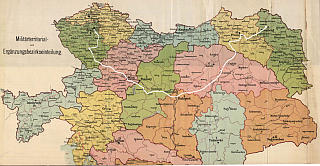
Švejk's journey on a of Austria-Hungary from 1914, showing the military districts of k.u.k. Heer. The entire plot of The Good Soldier Švejk is set on the territory of the former Dual Monarchy.
The Fateful Adventures of the Good Soldier Švejk (mostly known as The Good Soldier Švejk) by Jaroslav Hašek is a novel that contains a wealth of geographical references - either directly through the plot, in dialogues or in the author's narrative. Hašek was himself unusually well travelled and had a photographic memory of geographical (and other) details. It is evident that he put a lot of emphasis on geography: Eight of the 27 chapter headlines in the novel contain geographical names.
This web site will in due course contain a full overview of all the geographical references in the novel; from Prague in the introduction to Klimontów in the unfinished Part Four. Continents, states (also defunct), cities, market squares, city gates, regions, districts, towns, villages, mountains, mountain passes, oceans, lakes, rivers, caves, channels, islands, streets, parks and bridges are included.
The list is sorted according to the order in which the names appear in the novel. The chapter headlines are from Zenny Sadlon's recent translation (1999-2008) and will in most cases differ from Cecil Parrott's translation from 1973.
The quotes in Czech are copied from the on-line version of The Good Soldier Švejk: provided by Jaroslav Šerák and contain links to the relevant chapter. The toolbar has links for direct access to Wikipedia, Google maps, Google search, svejkmuseum.cz and the novel on-line.
The names are coloured according to their role in the novel, illustrated by these examples: Sanok a location where the plot takes place, Dubno mentioned in the narrative, Zagreb part of a dialogue, and Pakoměřice mentioned in an anecdote.
 Places index of countries, cities, villages, mountains, rivers, bridges ... (591)
Show all
Places index of countries, cities, villages, mountains, rivers, bridges ... (591)
Show all I. In the rear
14. Švejk as military servant to senior lieutenant Lukáš (60)
II. At the front
2. Švejk's budějovická anabasis (64)
3. Švejk's happenings in Királyhida (43)
III. The famous thrashing
1. Across Magyaria (38)
2. In Budapest (38)
3. From Hatvan to the borders of Galicia (50)
4. Forward March! (42)
I. In the rear
14. Švejk as military servant to senior lieutenant Lukáš (60)
II. At the front
2. Švejk's budějovická anabasis (64)
3. Švejk's happenings in Királyhida (43)
III. The famous thrashing
1. Across Magyaria (38)
2. In Budapest (38)
3. From Hatvan to the borders of Galicia (50)
4. Forward March! (42)


|
II. At the front |
 | |
3. Švejk's happenings in Királyhida | |||
 | Bruck an der Leitha - Királyhida |  | |||
| |||||
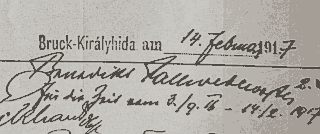
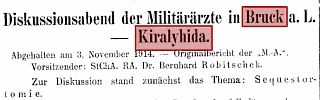
, 1915
Bruck an der Leitha - Királyhida is just about mentioned in the introduction to [II.3].
Background
Bruck an der Leitha - Királyhida is a collective term for the twin towns Bruck and Királyhida, often used in military documents issued by Ersatzbataillon IR. 91 and others. Shorter versions were Bruck-Királyhida and Bruck a.d. Leitha/Királyhida.
Quote(s) from the novel
[II.3] Jednadevadesátý pluk se stěhoval do Mostu nad Litavou - Királyhidy.
Also written:Most nad Litavou - KirályhidaHašek
|
| Abyssinia | | |||
| |||||
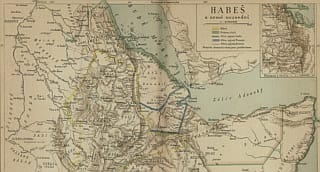
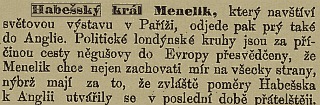
, 6.3.1900
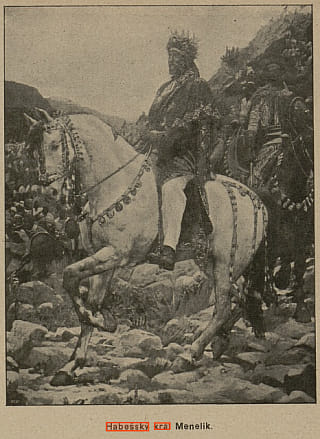
, 14.1.1906
Abyssinia is mentioned as an adjective in the form of an "Abyssinian king" who had been exhibited in a circus on the island Štvanice. This king reportedly fornicated with a teacher who wrote poems for the Lada magazine and she gave birth to a son who later became known as negro Kristian.
Background
Abyssinia was a monarchy that roughly covered the areas of current Ethiopia and Eritrea. It was the only country in Africa that escaped European colonial rule and the only one on the continent that was predominantly Christian. Until emperor Haile Selassie was deposed by a coup in 1974 it was the oldest existing state in the world.
Kingdom or Empire?
Many would question Švejk's use of the term "Abyssinian king" because Ethiopia is generally associated with emperors like Haile Selassie. Searches in newspapers from the period do however reveal that king was often used at the time. Probably this is down to ambiguities in the translation of the term Negus. The term emperor seems to have appeared later and Negus was also often used.
Negus of Abyssinia in Hašek's lifetime was Melenik II. (1844-1913). He is best known for having thwarted an Italian invasion in 1896 and thus preserved the country's independence. His army beat the aggressors in the battle of Adua and a peace agreement was signed. His army was well organised and equipped with modern weapons from England and Belgia[a].
Melenik undertook trips to Europe but it is doubtful if he ever visited Prague and if so he would surely not have let himself be exhibited in a circus.
Švejk's imagination
The story about the king of Abyssinia as told in The Good Soldier Švejk is obviously a figment of Švejk's imagination and although a real negro Kristian lived in Prague at the time he had nothing to do with Abyssinia (he was born on a Caribic island).
Quote(s) from the novel
[II.3] „S tím vzájemným pářením,“ poznamenal Švejk, „je to vůbec zajímavá věc. V Praze je číšník černoch Kristián, jehož otec byl habešským králem a dal se ukazovat v Praze na Štvanici v jednom cirku.
Also written:HabešczAbessiniende
| a | Kampen ved Adua | 14.3.1896 |
|
| Štvanice | | |||
| |||||
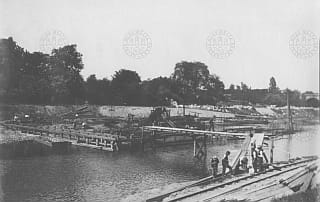
3.6.1908 • Pohled na stavbu plavební komory u ostrova Štvanice. Vpravo Negrelliho viadukt.
Štvanice (the island) is mentioned in the story Švejk tells Einjährigfreiwilliger Marek about an Abyssinian king who had been exhibited in a cirkus on the island. This king reportedly fornicated with a teacher who wrote peoms for the Lada magazine and they had a son. See negro Kristian.
Background
Štvanice is an island in the river Vltava in Prague that is located between Karlín and Holešovice. It is and was mainly used as a bathing and recreation area.
In historical newspapers there is no indication that a cirkus ever performed on the island, and definitely not with an Abyssinian (Ethiopian) king as an item to be exhibited. This information is surely a product of Švejk's lively imagination.
Quote(s) from the novel
[II.3] „S tím vzájemným pářením,“ poznamenal Švejk, „je to vůbec zajímavá věc. V Praze je číšník černoch Kristián, jehož otec byl habešským králem a dal se ukazovat v Praze na Štvanici v jednom cirku.
Also written:Hetzinselde
|
| Franz Joseph Land | | |||
| |||||

Fridtjof Nansen and Frederick Jackson in 1896
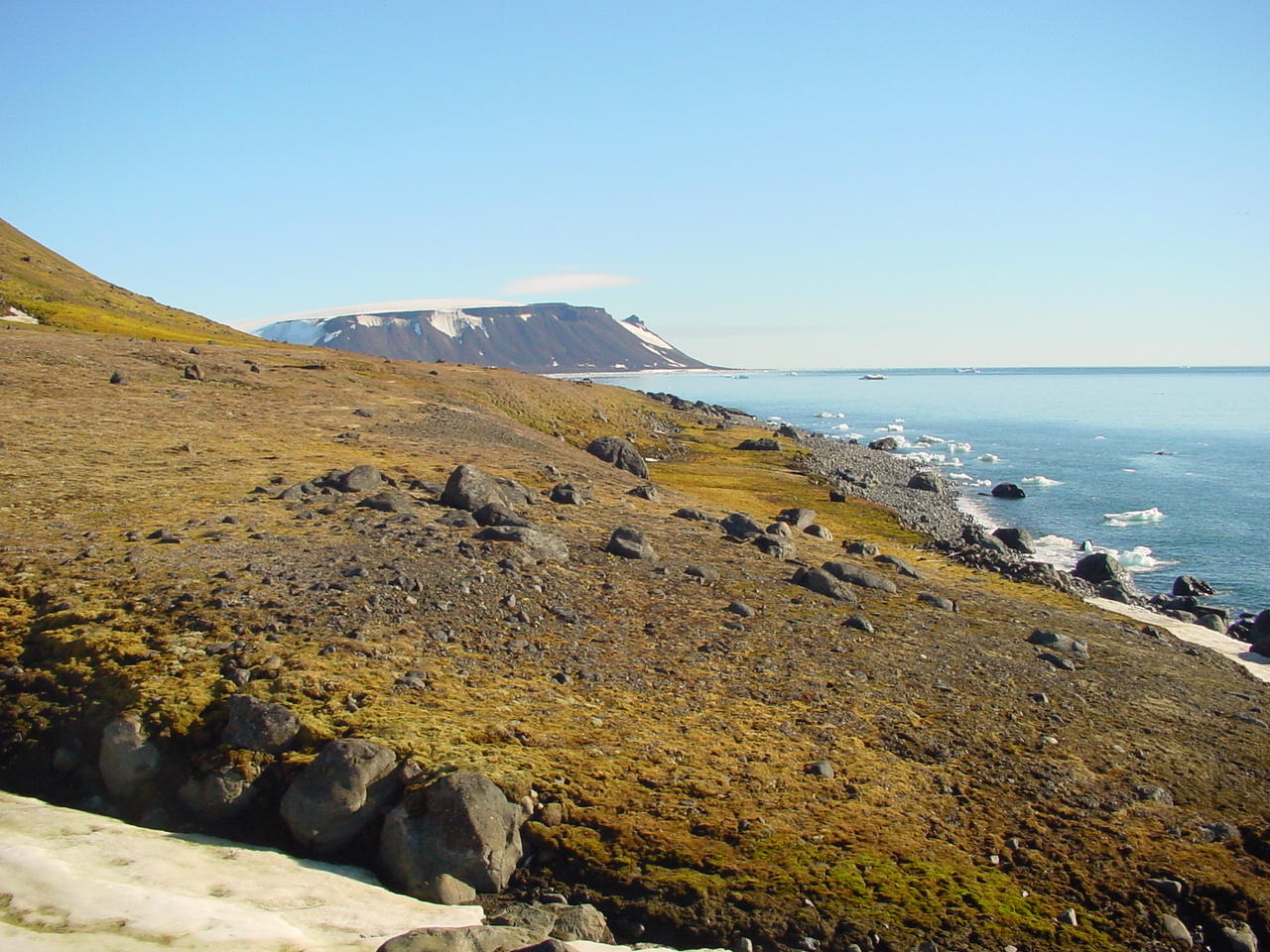
Franz Joseph Land is mentioned by Švejk in a conversation with Einjährigfreiwilliger Marek and the guard on the way from Mariánská kasárna to the station in Budějovice. The two portray it as an Austrian colony, inhabited by eskimos.
Background
Franz Joseph Land is an archipelago in the northern part of the Barents Sea which belongs to Russia. The first officially recognized discovery took place in 1873 by the Austro-Hungarian North Pole Expedition led by polar explorers Julius von Payer and Karl Weyprecht. On their way back the expedition requested that the isles be named after the emperor and this was reported in the newspapers in 1874[a].
In 1914 the uninhabitated islands were still no-mans land and it was only in 1926 that they became part of the Soviet Union.
Quote(s) from the novel
[II.3] "Vypravovalo se," prohodil Švejk, "že Rakousko má přece kolonie, někde na severu. Nějakou tu Zem císaře Františka Josefa..." "Nechte si to, hoši," řekl jeden voják z eskorty, "to je moc nevopatrný, vypravovat dnes vo nějakej Zemi císaře Františka Josefa. Nejmenujte nikoho a uděláte lepší..." "Tak se podívejte na mapu," vpadl do toho jednoroční dobrovolník, "že opravdu je země našeho nejmilostivějšího mocnáře císaře Františka Josefa. Podle statistiky je tam samý led a vyváží se odtud na ledoborcích patřících pražským ledárnám. Tento ledový průmysl je i cizinci neobyčejně ceněn a vážen, poněvadž je to podnik výnosný, ale nebezpečný. Největší nebezpečí panuje při dopravě ledu ze Země císaře Františka Josefa přes polární kruh. Dovedete si to představit?"
Also written:Frans Josefs landnnЗемля Франца-Иосифаru
| a | Unsere Nordpolfahrer gerettet | 4.9.1874 |
|
| Pakoměřice | | ||||
| ||||||
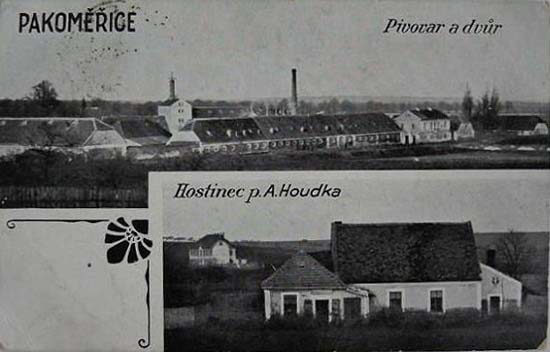
Pivovar Pakoměřice

, 1.11.1908
Pakoměřice is mentioned in a comment Švejk makes to Feldoberkurat Lacina, agreeing that onions must be added to the gravy. He goes on to tell about a brewmaster from here who indeed added onion to the beer because it would cause thirst.
Background
Pakoměřice is a village just north of Prague, administratively part of Bořanovice. The major attraction is the castle that once belonged to the noble family Nostitz (see Feldmarschall Nostitz-Rieneck). It has recently (2020) been renovated after having fallen into disrepear.
The brewery
The brewery was one of the oldest in Bohemia and is mentioned as early as 1636[a]. The owner at the beginning of the 20th century was Count Erwin Nostitz. Around 1870 the brewery was modernised and it delivered beer also to restaurants in Prague. In 1908 the production was 17,116 hectolitres and the brewmaster was Rudolf Zilka[b]. During and after the war production stagnated and the last year it operated was in 1926. The building is still intact and like the castle it has recently been renovated.
Demography
According to the 1910 census Pakoměřice had 113 inhabitants of which 113 (100 per cent) reported that they used Czech in their daily speech. The judicial district was okres Karlín, administratively it reported to hejtmanství Karlín.
Source:Seznam míst v království Českém(1913)
Military
In accordance with the recruitment districts infantrymen from Pakoměřice were usually assigned to Infanterieregiment Nr. 28 (Prag) or k.k. Landwehrinfanterieregiment Nr. 8 (Prag).
Quote(s) from the novel
[II.3] „Ano,“ podotkl Švejk, „pan obrfeldkurát má ouplnou pravdu. Čím víc cibule, tím lepší. V Pakoměřicích bejval sládek a ten dával i do piva cibuli, poněvadž prej cibule táhne žízeň. Cibule je vůbec náramně prospěšná věc. Pečená cibule se dává i na nežidy...“
Literature
| a | Pivovar (Pakoměřice, Česko) | ||
| b | Výroba piva jednotlivých pivovarů v Cechách roku 1908 | 1.11.1908 |
|
| Krumlovsko | | |||
| |||||
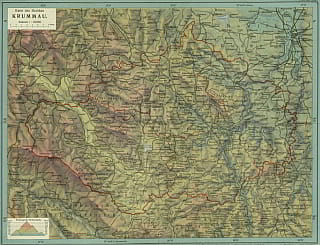
Karte des Bezirkes Krummau
Krumlovsko is mentioned on the train from Budějovice to Bruck an der Leitha - Királyhida. The author remarked that 12. Kompanie consisted of Germans from Krumlovsko and Kašperské Hory and that the company were singing and yelling all the time.
Background
Krumlovsko is a common term for the area around Krumlov but here the author probably refers to hejtmanství Krumlov, one of the five political districts that Infanterieregiment Nr. 91 was recruited from.
According to the 1910 census Krumlovsko had 61,068 inhabitants of which 15,729 (25 per cent) reported Czech as their mother tongue, the rest were German speakers.
Wann ich kumm
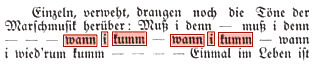
,20.6.1915
The verses that the soldiers from Kašperské Hory and Krumlovsko sang on the train from Budějovice are fragments from a folk song of German origin that through the 19th century had become popular. The song is popular not only in German-speaking countries but also world-wide. Even Elvis Presley recorded it in 1960 with the title Wooden Heart. As is often the case with folk songs, various lyrics and spellings exist. ,18.5.1827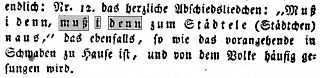
The melody is believed to be a traditional song from Swabia but the lyrics were added in 1827 by the composer Friedrich Silcher (1789-1860) who also published it. During World War I it was much used by soldies that were leaving home for service and it was also popular as a march anthem. The title is officially "Muß i denn".
Military
In accordance with the recruitment districts infantrymen from Krumlovsko were usually assigned to Infanterieregiment Nr. 91 (Budweis) or k.k. Landwehrinfanterieregiment Nr. 29 (Budweis).
Quote(s) from the novel
[II.3] Teprve řev z vagonů vzadu přerušil vypravování Švejkovo. 12. kumpanie, kde byli samí Němci od Krumlovska a Kašperských Hor, hulákala: Wann ich kumm, wann ich kumm, wann ich wieda, wieda kumm.
Literature
- Český Krumlov1913
|
| Jabal an-Nûr | | |||
| |||||

Jabal an-Nûr is indirectly mentioned by Einjährigfreiwilliger Marek through the proverb "if the mountain will not come to Muhammad…"
Background
Jabal an-Nûr is a mountain by Mekka, famous through the legend where Muḥammad met Allāh's messenger, the angel Gabriel.
Quote(s) from the novel
[II.3] „Milý pane kaprále,“ ozval se jednoroční dobrovolník, „papíry nejdou samy k veliteli eskorty. Když hora nejde k Mahomedovi, musí jít velitel eskorty sám pro papíry. Vy jste se nyní ocitl před novou situací. Rozhodně nesmíte zadržovat nikoho, který má vyjít na svobodu. Na druhé straně nesmí nikdo opustit podle platných předpisů arestantský vagon. Opravdu nevím, jak se dostanete z této prožluklé situace. Čím dál je to horší. Teď je půl jedenácté.“
Also written:_النورar
|
| Saanen | | ||||
| ||||||
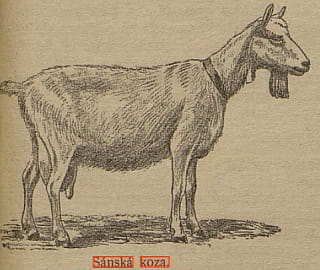
,10.1918
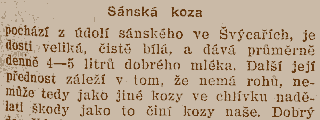
Zdroje hospodářského blahobytu, ,1906
Saanen is mentioned indirectly through the expression Saanen-goat. It as escorting corporal on the train to Bruck who lets the goat bleat itself into the story when Einjährigfreiwilliger Marek tells about his unfortunate experiences as editor of Svět zvířat. In the corporal's home village those goats died and the owner wrote to the magazine for advice.
Background
Saanen is a valley in Berner Oberland in Switzerland from where the Saanen goat breed has its name.
The goat
As the name indicates this goat breed originates from Switzerland and is best known for milk production. Generally, they have white, short fur and are without horns. In Bohemia, they were pretty widespread at the beginning of the 20th century, and this is respected both in newspapers and specialist literature.
It is very likely that Hašek came across articles about this animal during his editorship of Svět zvířat in 1909 and 1910 but that he also may have drawn inspiration from other publications he was familiar with, for instance, Zdroje hospodářského blahobytu that was printed by publisher Kočí in 1906[a].
Quote(s) from the novel
[II.3] „Ten časopis,“ odpověděl desátník se zřejmým výrazem radosti, že hovor převádí se na jiné pole, „odbíral hospodský u nás ve vsi, poněvadž měl děsně rád sánské kozy, a všechny mu chcíply. Proto žádal v tom časopise o radu.“
| a | Zdroje hospodářského blahobytu | 1906 |
|
| Iceland | | |||
| |||||

Do země ohně a ledu, , 1922
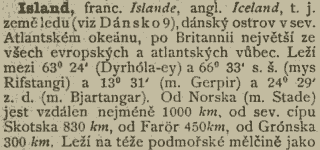
, 1897
Iceland is mentioned when Einjährigfreiwilliger Marek tells about the Islandic bat-the-remote, one of the many exotic animals that he invented during his stint as inventive editor of Svět zvířat.
Background
Iceland is an island and republic in the North Atlantic that until 1918 was ruled by Denmark. The Danish king remained head of state until 1944 when Iceland became a republic. The island was colonised by Norsemen in the 9th and 10th centuries and was independent for 300 years when it came under Norwegian, later Danish rule.
Reykjavik is the capital and largest city and the population of the country is now (2019) estimated at 360,000. In 1890 it had 71,000 inhabitants. Iceland is known for its volcanic activity and there have been several major eruptions in the last 50 years. The main source of income is fisheries.
Bats
Iceland is not a natural habitat for bats but occasionally they arrive with ships. In this context Einjährigfreiwilliger Marek's expression "bat-the-remote" is descriptive.
Quote(s) from the novel
[II.3] Věděl Brehm a všichni ti, kteří šli po něm, o mém netopýrovi z ostrova Islandu, "netopýru vzdáleném", o mé kočce domácí z vrcholku hory Kilimandžaro pod názvem "pačucha jelení dráždivá"?
Also written:IslandczIslanddeÍslandis
|
| Kilimanjaro | | |||
| |||||

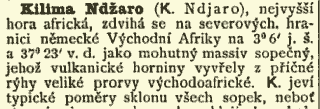
, 1899
Kilimanjaro is mentioned when Einjährigfreiwilliger Marek tells about the "deer-sniffer-the-irritable", one of his many creative inventions as editor of Svět zvířat.
Background
Kilimanjaro is the highest peak in Africa (5,892 metres), it is located in Tanzania near the Kenyan border. In 1914 the montain was situated on the territory of German East Africa.
Jaroslav Hašek also mentions the mountain in the story Záhady vesmíru from 1922[a].
Quote(s) from the novel
[II.3] Věděl Brehm a všichni ti, kteří šli po něm, o mém netopýrovi z ostrova Islandu, ,netopýru vzdáleném’, o mé kočce domácí z vrcholku hory Kilimandžaro pod názvem ,pačucha jelení dráždivá’?
Also written:KilimandžároczKilimandscharode
| a | Záhady vesmíru | 1922 |
|
| Postojna Cave | | |||
| |||||
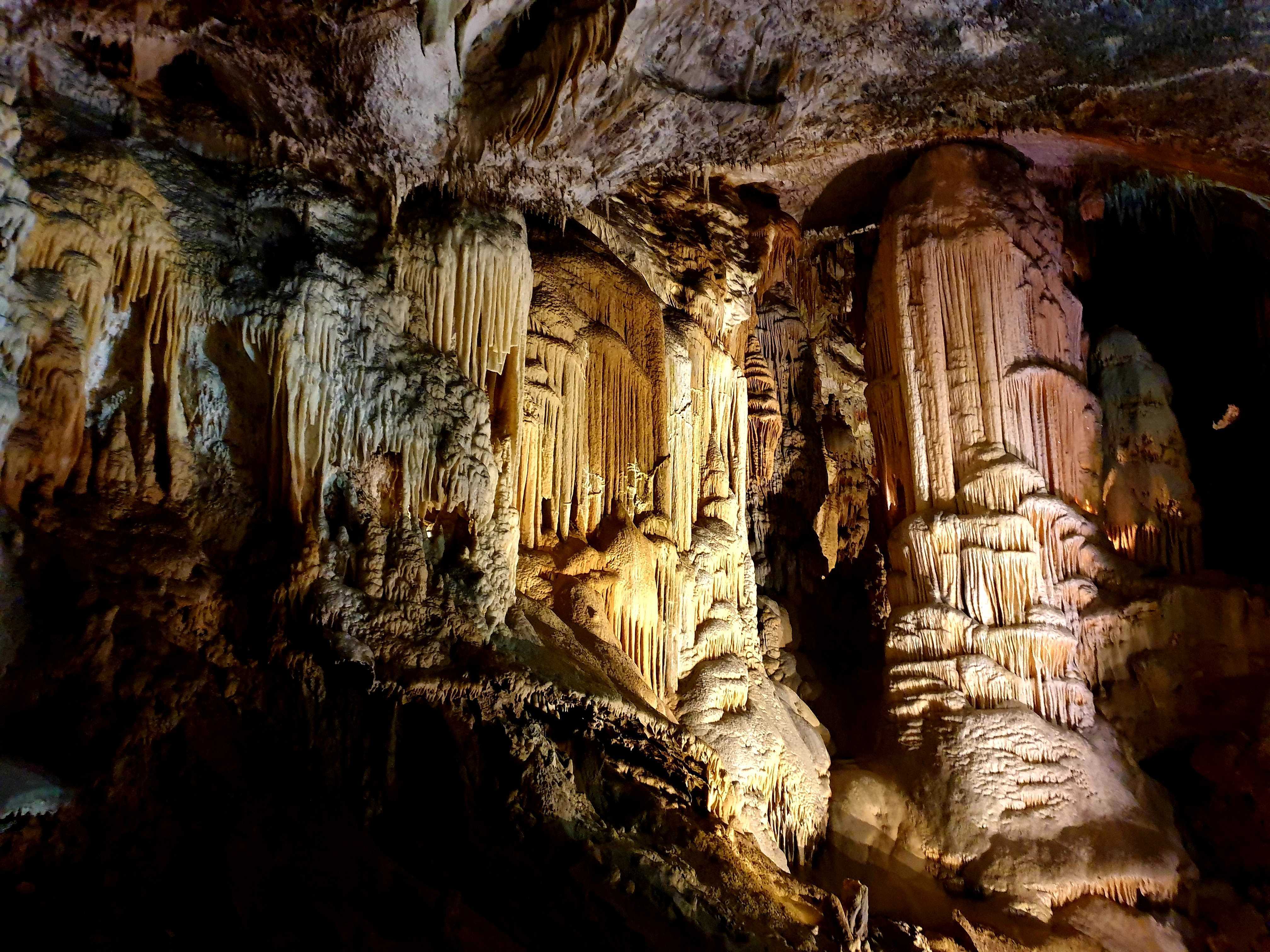
Postojna Cave is mentioned by Einjährigfreiwilliger Marek in his story on inventing animals in his brief job as editor of Svět zvířat. The Postojna cave did, according to Marek, at a certain time extend all the way to Baltic Sea. See Khún for more information.
Background
Postojna Cave is a cave-system in Slovenia, one of the country's main tourist attractions.
Quote(s) from the novel
[II.3] Měli do té doby přírodozpytci zdání o nějaké bleše inženýra Khúna, kterou jsem našel v jantaru a která byla úplně slepá, poněvadž žila na podzemním praehistorickém krtkovi, který také byl slepý, poněvadž jeho prababička se spářila, jak jsem psal, s podzemním slepým macarátem jeskynním z Postojenské jeskyně, která v té době zasahovala až na nynější Baltický oceán?
Also written:Postojenská jeskyněHašekPostojnské jeskyněczAdelsberger GrottedeGrotte di PostumiaitPostojnska jamasl
|
| Baltic Sea | | |||
| |||||

This is how Josef Lada imagined Hašek crossing the Baltic Sea in December 1920
Baltic Sea is mentioned by Einjährigfreiwilliger Marek in his story on inventing animals in his brief job as editor of Svět zvířat. The Postojna cave was, according to Marek, at a certain time supposed to have extended all the way to the Baltic Sea.
Background
Baltic Sea is an inland ocean located in Northern Europe, the largest brackwater area on the globe. It borders Denmark, Sweden, Finland, Russia, Estonia, Latvia, Lithuania, Poland and Germany.
Jaroslav Hašek and his Russian wife Alexandra Lvova spent five days on the steamer Kypros in December 1920, sailing from Reval (now Tallinn) to Stettin (now Szczecin). This was on their return from Russia. The trip lasted from 4 December to 8 December.
Quote(s) from the novel
[II.3] Měli do té doby přírodozpytci zdání o nějaké bleše inženýra Khúna, kterou jsem našel v jantaru a která byla úplně slepá, poněvadž žila na podzemním praehistorickém krtkovi, který také byl slepý, poněvadž jeho prababička se spářila, jak jsem psal, s podzemním slepým macarátem jeskynním z Postojenské jeskyně, která v té době zasahovala až na nynější Baltický oceán?
Also written:Baltický oceánHašekBaltské mořeczOstseedeБалтийское мореruÖstersjönse
|
| Podkrkonoší | | |||
| |||||
Václav Kudrnáč,1911
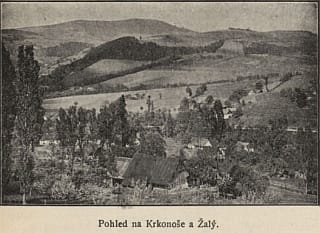
Podkrkonoší is mentioned by Einjährigfreiwilliger Marek when he relates about his time as editor of Svět zvířat. Bee-keeping in this region died out after Marek's writing.
Background
Podkrkonoší is a region below the Krkonoše mountains in the north-eastern part of Bohemia. The term is somewhat vague because the area isn't and has never been an administrative unit with defined borders. The main population centres are Lomnice nad Popelkou, Nová Paka, Hořice, Dvůr Králové nad Labem, and Jilemnice.
Quote(s) from the novel
[II.3] Původ k tomu daly mé různé drobné zprávy o včelařství, drůbežnictví, kde jsem rozvinul své nové theorie, které způsobily pravé zděšení, poněvadž po mých jednoduchých radách ranila známého včelaře pana Pazourka mrtvice a vyhynulo včelaření na Šumavě i v Podkrkonoší.
Literature
|
| Frýdlant nad Ostravicí | | |||
| |||||
Frýdlant 1915
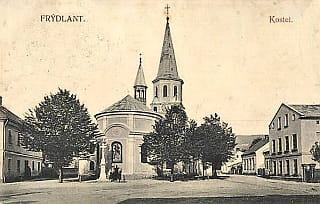
Frýdlant nad Ostravicí is mentioned when Einjährigfreiwilliger Marek on the train between Budějovice and Bruck relates the story of his time as editor of Svět zvířat. The theme is more precisely his row with Jos. M. Kadlčák, the editor of Selský obzor. Marek had sent an insolent letter to the editor, describing him as a dumb beast.
Background
Frýdlant nad Ostravicí is a town in the Beskydy mountains in Moravia, near the Polish and Slovak borders. This is where Jos. M. Kadlčák and lived at the time when Jaroslav Hašek was editor of Svět zvířat (1909 and 1910).
Quote(s) from the novel
[II.3] Než to jsou věci vedlejší, ač by zajisté nebylo na škodu, kdyby se váš redaktor ,Světa zvířat’ dříve přesvědčil, komu vytýká hovadinu, nežli nájezd vyjde z pera, třeba je určen na Moravu do Frýdlandu u Místku, kde byl do tohoto článku též odbírán váš časopis.
Also written:FrýdlandHašekFriedland an der Ostrawitzade
|
| Místek | | |||
| |||||

Místek 1916
Místek is mentioned in connection with Einjährigfreiwilliger Marek's dispute with Jos. M. Kadlčák.
Background
Místek is a former town in the Beskydy mountains in Moravia, near the borders with Poland and Slovakia. The town was in 1943 merged with Frýdek and named Frýdek-Místek. Místek was situated on the border with Austrian Silesia.
Hašek in Frýdek
It is quite possible that Jaroslav Hašek visited Místek because he once found himself detained in its twin-town Frýdek. This was because he didn't carry the necessary travelling documents. On 6 August 1903 the police in Frýdek sent a letter to their colleagues in Prague to enquire about the identity of the wanderer. The letter was signed Jan Brotánek and addressed to dr. Záhoř[a].
Quote(s) from the novel
[II.3] Než to jsou věci vedlejší, ač by zajisté nebylo na škodu, kdyby se váš redaktor ,Světa zvířat’ dříve přesvědčil, komu vytýká hovadinu, nežli nájezd vyjde z pera, třeba je určen na Moravu do Frýdlandu u Místku, kde byl do tohoto článku též odbírán váš časopis.
| a | Lidský profil Jaroslava Haška | 1979 |
|
| Havlíčkova třída | | |||
| |||||

Havlíčkova, 1922
Hašek, Havlíčkova, 1912

, 1912
Havlíčkova třída is mentioned in Švejk's story about some Mestek, the man who "discovered" a mermaid who he exhibited in i window in this street. The "mermaid" was a woman frå Žižkov who after finishing her daily duty as mermaid was seen soliciting in Táborská ulice. The woman didn't have a police book and when Polizeikommissar Drašner discovered this she was locked up and Mestek's mermaid business came to an end.
Background
Havlíčkova třída was the name of a long street (almost 2 km) in Vinohrady and Nusle, named after the writer and politician Karel Havlíček Borovský (1821-1856). In 1926 the street was given its present name: Bělehradská ulice.
Although Mestek actually exhibited "mermaids"[d] it has not been possible to verify that this activity took place in exactly this street. Nor has the rest of Švejk's story been verified.
Hašek in Havlíčkova
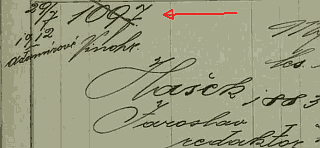
Jaroslav Hašek lived in no. 1097/81 for a period from 29 July 1912[a]. His host was Josef Alois Adamíra (1877-1953), a chemist who at the time was employed at the laboratory of Zemědelská rada (The Agricultural Council)[b]. It should also be noted that he was a prominent occultist[c] and as such may be served as an inspiration for Hašek's literary figure cook Jurajda.
Quote(s) from the novel
[II.3] Jednou před lety byl v Praze nějakej Mestek a ten vobjevil mořskou pannu a ukazoval ji na Havlíčkově třídě na Vinohradech za plentou. Ve plentě byl otvor a každej moh vidět v takovej polotmě prachvobyčejný kanape a na něm se válela jedna ženská ze Žižkova.
Sources: Jaroslav Šerák, Břetislav Hůla
Literature
| a | Haškovi v Praze | ||
| b | Adresář města Král. Vinohradů | 1912 | |
| c | Adamíra Josef Alois | 1936 | |
| d | Noční Prahou | 1927 |
|
| Táborská ulice | | |||
| |||||
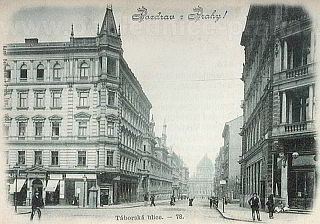
Táborská ulice is mentioned in Švejk's story about a certain Mestek, the man who "discovered" a mermaid who he exhibited her in Havlíčkova třída. The prostitute who was on display was later seen plying Táborská ulice at night.
The street appears again in Švejk's tale related to Italy changing allegiance in 1915, here illustrated by merchant Hořejší, merchant Pošmourný and grocer Havlasa.
Background
Táborská ulice is the former name of Legerova ulice, a long street in Nové město which stretches along the border of Vinohrady.
Quote(s) from the novel
[II.3] Házely se jí až na pupek jako utahanej flundře. V sedum hodin večer pak Mestek zavřel panorámu a řek: ,Mořská panno, můžete jít domů,’ vona se převlíkla a v deset večer už ji bylo vidět chodit po Táborskej ulici a zcela nenápadně každýmu pánovi, kterýho potkala, říkat: ,Hezoune, šel si to zafilipínkovat.’ Poněvadž neměla knížku, tak ji při šťáře s druhejma podobnejma myšema pan Drašner zavřel, a Mestek měl po kšeftě.“
|
| Okrouhlice | | |||
| |||||

Okrouhlice in 1921
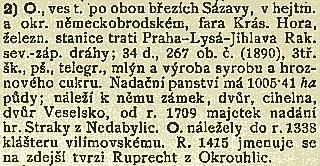
,1902
Okrouhlice is mentioned by Švejk when he thinks aloud about the appropriateness of calling people with animal names, something he finds entirely acceptable.
Background
Okrouhlice is a village by the river Sázava in Vysočina, 10 km from Lipnice. The author had already moved to Lipnice (25 August 1921) when he wrote this part of the novel. Already in [II.2] themes from the area around start to appear, perhaps as early as in [I.14,6]. See butcher Pejchar.
Demography
According to the 1910 census Okrouhlice had 356 inhabitants of which 356 (100 per cent) reported that they used Czech in their daily speech. The judicial district was okres Německý Brod, administratively it reported to hejtmanství Německý Brod.
Source:Seznam míst v království Českém(1913)
Military
In accordance with the recruitment districts infantrymen from Okrouhlice were usually assigned to Infanterieregiment Nr. 21 (Časlau) or k.k. Landwehrinfanterieregiment Nr. 12 (Časlau).
Quote(s) from the novel
[II.3] Tak vidíte, pane kaprál, co může bejt z maličkýho a nepatrnýho nedorozumění, které nestojí ani za řeč. V Okrouhlicích byl zas jeden občan a ten se urazil, když mu řekli v Německém Brodě, že je krajta tygrovitá. Vono je víc takovejch slov, který nejsou naprosto trestný. Na příklad jestli bychom vám řekli, že jste ondatra. Mohl byste se za to na nás zlobit?“
|
| Německý Brod | | |||
| |||||
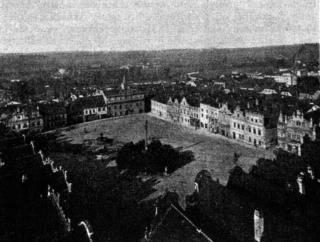
,1913
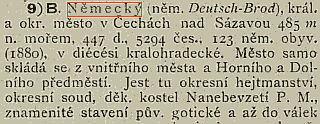
,1891
Německý Brod is mentioned by Švejk when thinking aloud about the appropriateness of calling people with animal names.
Background
Německý Brod is the former name of Havlíčkův Brod, a town in Vysočina, 15 km from Lipnice (where this part of the novel were written). The town was renamed in 1945.
Jaroslav Hašek visited Německý Brod from 1st to 3 August 1922 where he also was present at a stage play based on The Good Soldier Švejk. The play was very well received and Hašek was very pleased as he personally received the applaus of the audience[a].
Demography
According to the 1910 census Německý Brod had 8,529 inhabitants of which 8,498 (99 per cent) reported that they used Czech in their daily speech. The judicial district was okres Německý Brod, administratively it reported to hejtmanství Německý Brod.
Source:Seznam míst v království Českém(1913)
Military
In accordance with the recruitment districts infantrymen from Německý Brod were usually assigned to Infanterieregiment Nr. 21 (Časlau) or k.k. Landwehrinfanterieregiment Nr. 12 (Časlau).
Radko Pytlík
Hašek pak osobně navštívil představení v Havlíčkově Brodě ve dnech l. a 2. a 3. srpna 1922 a byl velmi spokojen. Z úspěchu měl mimořádnou radost, jako autor byl potleskem několikrát vyvolán. Rozzářen vcházel na rampu a klaněl se. Po divadle uspořádal v hotelu U Černého orla velkou hostinu. Spatřoval v tom uměleckou satisfakci. Zdrželi se se Šurou a se Štěpánkem v Brodě tři dny a utratili mnoho peněz po nákupech a hostinách.
Quote(s) from the novel
[II.3] Tak vidíte, pane kaprál, co může bejt z maličkýho a nepatrnýho nedorozumění, které nestojí ani za řeč. V Okrouhlicích byl zas jeden občan a ten se urazil, když mu řekli v Německém Brodě, že je krajta tygrovitá. Vono je víc takovejch slov, který nejsou naprosto trestný. Na příklad jestli bychom vám řekli, že jste ondatra. Mohl byste se za to na nás zlobit?“
Sources: Radko Pytlík
Also written:Deutschbrodde
Literature
| a | Toulavé house | 1971 |
|
| Terezín | | ||||
| ||||||
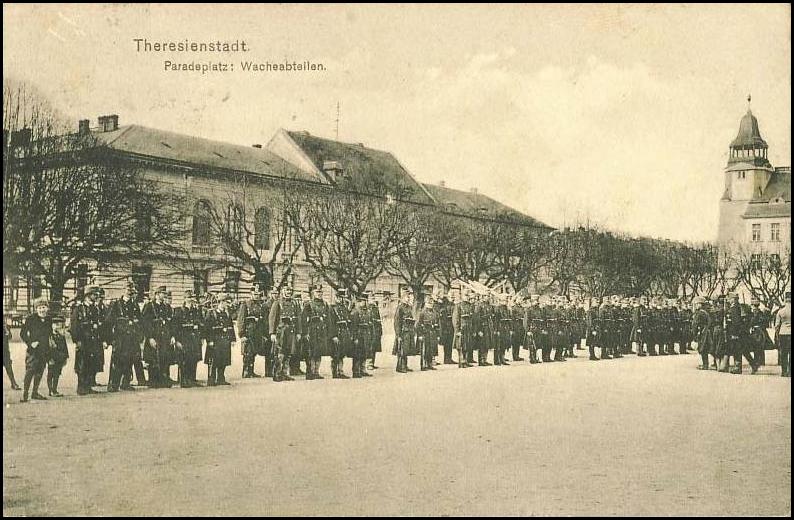
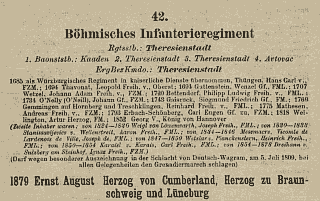
1912
,1906
Terezín features in Švejk's story from his time doing National Service in 1912. He had been accused of writing: "We'll shit on the war" on a wall by a munition dump. Švejk was taken to the Landgericht in Terezín because of this incident.
Background
Terezín is a town and former fortress in northern Bohemia, abroad better known under the name of Theresienstadt. It was constructed in the 18th century as one of several border forts to protect Austria against the increasingly powerful Prussia. Gavrilo Princip, the killer of Archduke Franz Ferdinand was imprisoned here until his death in 1918.
Terezín is notoriously known from the time of the Nazi occuptaion (1939-45) when it was converted to a ghetto and transit camp for prisoners who were destined for the death camps.
Two of the translators of Švejk; Grete Reiner and Ruth Bondi were interned in Terezín during World War II. Reiner was later murdered in Auschwitz (1944), whereas Bondi survived and now (2010) lives in Israel.
Demography
According to the 1910 census Terezín had 6,094 inhabitants of which 2,609 (42 per cent) reported that they used Czech in their daily speech. The judicial district was okres Litoměřice, administratively it reported to hejtmanství Litoměřice.
Source:Seznam míst v království Českém(1913)
Military
In accordance with the recruitment districts infantrymen from Terezín were usually assigned to Infanterieregiment Nr. 42 (Leitmeritz) or k.k. Landwehrinfanterieregiment Nr. 9 (Leitmeritz). Terezín was in 1912 the headquarter of 29. Infanteriedivision as well as 57. Infanteriebrigade. About half the population was employed by the armed forces. It also housed a Garnisonsgericht and a Landwehrgericht.
Quote(s) from the novel
[II.3] Nešťastnou náhodou ještě nad tím nápisem byl jinej: ,My na vojnu nepůjdeme, my se na ni vyséreme’, a to bylo v roce 1912, když jsme měli jít do Srbska kvůli tomu konsulovi Procházkovi. Tak mě hned poslali do Terezína k landgerichtu.
|
| Dvůr Králové nad Labem | | |||
| |||||
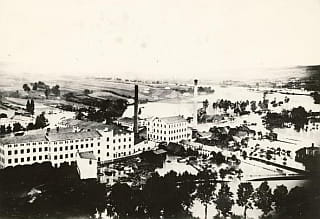
Pohled na Neumannovu továrnu za povodně r. 1897. Tato povodeň tak zasáhla město, že byla iniciována stavba přehrady v Tešnově.

,1894

,31.7.1897
Dvůr Králové nad Labem features in Švejk's story from his time doing military service in 1912. He was accused of writing: "e'll shit on the war" on a wall by a munition dump. When investigated by a military court (see Landgericht) he had to, amongst other things, write down a brief description of the floods here on 29 July 1897 in order to prove that the handwriting was not his.
Background
Dvůr Králové nad Labem is a town by the river Labe is eastern Bohemia, in the Hradec Králové region. The town is nowadays primarily known for its zoo.
The 1897 floods
The flood happened exactly on the date that is mentioned in The Good Soldier Švejk. It had been raining persistently for 14 days and when torrential rain occured the soaked soil could no longer absorb the water and the river flooded the valley[a].
Demography
According to the 1910 census Dvůr Králové nad Labem had 15,051 inhabitants of which 13,625 (90 per cent) reported that they used Czech in their daily speech. The judicial district was okres Dvůr Králové nad Labem, administratively it reported to hejtmanství Dvůr Králové nad Labem.
Source:Seznam míst v království Českém(1913)
Military
In accordance with the recruitment districts infantrymen from Dvůr Králové nad Labem were usually assigned to Infanterieregiment Nr. 18 (Königgrätz) or k.k. Landwehrinfanterieregiment Nr. 11 (Jičin).
Quote(s) from the novel
[II.3] ,Bylo 29. července 1897, kdy Králový Dvůr nad Labem poznal hrůzy prudkého a rozvodněného Labe’.
Also written:Dvůr Králové on the ElbeParrottKrálův Dvůr on the LabeSadlonKöniginhof an der Elbede
Literature
- Historie města
- Königinhof, 30. Juli31.7.1897
| a | Ničivá povodeň z roku 1897 |
|
| Elbe | | |||
| |||||

Labe (Elbe) in Hradec Králové, 14.10.2010
Elbe features in Švejk's story from his time doing military service in 1912. He was accused of writing: "we'll shit on the war" on a wall by a munition dump. See also Terezín.
Background
Elbe (cz. Labe) is a river that originates in the Czech Republic and flows through Germany on its way to the North Sea. The catchment area includes most of Bohemia and the eastern part of Germany. Several towns and cities along the river are mentioned in The Good Soldier Švejk: Dvůr Králové nad Labem, Jaroměř, Pardubice, Poděbrady, Nymburk, Podmokly and Hamburg.
The 1897 floods
The flood happened exactly on the date that is mentioned in The Good Soldier Švejk. It had been raining persistently for 14 days and when torrential rain occured the soaked soil could no longer absorb the water and the river flooded the valley[a].
Quote(s) from the novel
[II.3] ,Bylo 29. července 1897, kdy Králový Dvůr nad Labem poznal hrůzy prudkého a rozvodněného Labe’.
Also written:Labecz
| a | Ničivá povodeň z roku 1897 |
|
| Dalmatia | | |||
| |||||
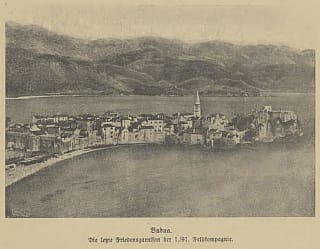
Budva, the southernmost garrison in the Dual Monarhcy.
,1924-1928
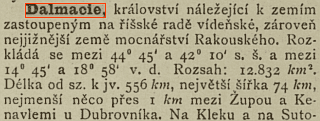
,1893
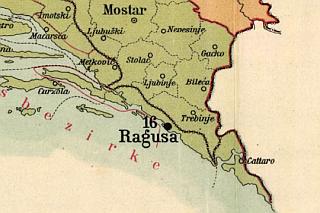
Southern Dalmatia towards Montenegro
, 1914
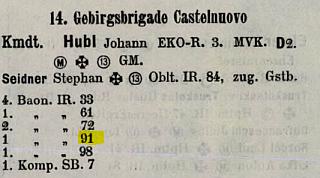
IR. 91, 1st Baon. by Cattaro.
, 1914
Dalmatia is mentioned in connection with the story Švejk tells abot soldiers killing their corporals, in this case Korporal Fiala who had his throat slit in Dalmatia.
Background
Dalmatia is a historical region on the eastern coast of the Adriatic Sea and is situated in current Croatia and Montenegro. Historically it was part of the Republikken Venice but became Habsburg territory after the Napoleonic Wars. It belonged to Cisleithania until 1918. Important cities are Dubrovnik, Šibenik, Split and Zadar. The area was multilingual with Serbo-Croat as by far the largest. Italian was also an official language and military documents used Italian names, for instance Spalato (Split). The southernmost part is today ruled by Montenegro.
Dalmatia and k.u.k. Heer
Korpskommando Nr. 16 was located at Ragusa (Dubrovnik) which was the main garrison town in the border regions. Further there were army units stationed at Castelnuovo (Herceg-Novi), Trebinje, and Bileća. The latter two were in Hercegovina.
Of particular interest is Castelnuovo as it hosted the 47. Infanteriedivision. Assigned to this unit was also the 1st battalion of IR. 91 who had been garrisoned here since 1906 as part of 14. Gebirgsbrigade (14th Mountain Brigade). In 1907 and 1908 they were located in Budua (Budva), in 1909 and 1910 in Cattaro, in 1911 in Crkvice, in 1912 Perzagno (Prčanj), in 1913 and 1914 Teodo (Tivat)[1]. Individual units were at the outbreak of war scattered: Teodo, Kozmač, Sutomore, Castellastua (Petrovac). Staničičkaserne in Teodo was the main site of the battallion.
1. Years are according to from Schematismus and thus usually reflects the state of the previous year. When a unit is listed from 1907 it therefore means that they were moved here already in 1906.
Budva was actually the southernmost garrison in the entire empire. The former commander of IR. 91, 1. battalion, Franz Graf, later wrote that being sent there was like being exiled, having to "spend years away from women, beer and the domestic conviviality". Still, all who had been there agreed it was a beautiful place. The biggest problem was however the distance to home, and in the spring the soldiers from South Bohemia longed after some good beer. They could get hold of strong Dalmatian wine but it was often poisonous!
The battalion remained in the area also during the first month of the war but from 5 September 1914 they were transported by train to the front against Serbia further north. They joined the rest of the regiment as late as 1916, on the Italian front. At least one familiar name from The Good Soldier Švejk served in southern Dalmatia before the war: Josef Adamička. It is also possible that Jan Vaněk served here during the first month of the war. A more marginal figure from the novel, Oberleutnant Wurm, served here as commander of the battalion's machine gun unit.
Quote(s) from the novel
[II.3] Jinej případ byl před léty v Dalmacii, tam kaprála podřezali a dodnes se neví, kdo to udělal. Zůstalo to zahalený v tajnosti, jen se ví tolik, že ten podřezanej kaprál se jmenoval Fiala a byl z Drábovny u Turnova
Also written:DalmácieczDalmatiendeDalmacijahr
Literature
- Dislokationswechsel beim 1./91. Feldbataillon in Süd-Dalmatien3.10.1913
- Die südlichsten Garnisonen der alten MonarchieFranz Graf1924-1928
- Mit dem I./91. Feldbataillon gegen MontenegroW. Tobner1924-1928
- Kolem boky KotorskéFratišek Češka10.9.1936
|
| Drábovna | | ||||
| ||||||
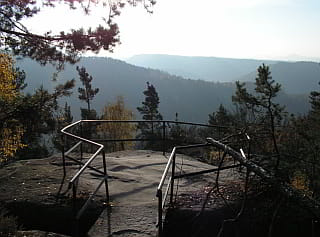
Drábovna is mentioned when Švejk tells the story about Korporal Fiala from Drábovna by Turnov who had his throat slit by his own soldiers.
Background
Drábovna presumably refers to a rock formation by Malá Skála between Jablonec and Turnov.
It is not a populated place and nor was it inhabited before World War I either.
Military
In accordance with the recruitment districts infantrymen from Drábovna were usually assigned to Infanterieregiment Nr. 94 (Turnau) or k.k. Landwehrinfanterieregiment Nr. 10 (JungbuzlU).
Quote(s) from the novel
[II.3] Jinej případ byl před léty v Dalmacii, tam kaprála podřezali a dodnes se neví, kdo to udělal. Zůstalo to zahalený v tajnosti, jen se ví tolik, že ten podřezanej kaprál se jmenoval Fiala a byl z Drábovny u Turnova.
Literature
|
| Turnov | | ||||
| ||||||
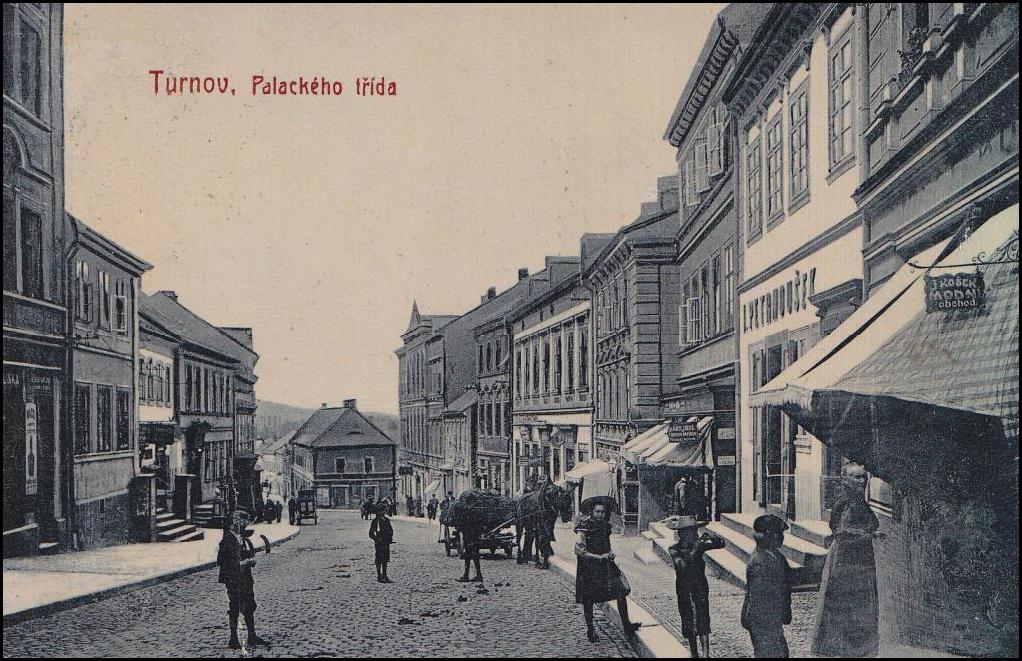
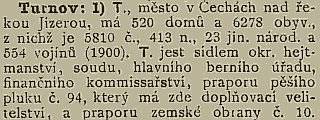
,1906
Turnov is mentioned when Švejk tells the story about Korporal Fiala from Drábovna by Turnov who had his throat slit by his own soldiers.
Background
Turnov is a town with appx. 15,000 inhabitants. It is situated in the Liberec district in the north of Czechia.
Demography
According to the 1910 census Turnov had 6,909 inhabitants of which 6,438 (93 per cent) reported that they used Czech in their daily speech. The judicial district was okres Turnov, administratively it reported to hejtmanství Turnov.
Source:Seznam míst v království Českém(1913)
Military
In accordance with the recruitment districts infantrymen from Turnov were usually assigned to Infanterieregiment Nr. 94 (Turnau) or k.k. Landwehrinfanterieregiment Nr. 10 (JungbuzlU). Turnov had some military significance with 551 persons employed by the armed forces. It was the seat of Ergänzungsbezirk and one battallion from Infanterieregiment Nr. 94 was garrisoned here.
Quote(s) from the novel
[II.3] Jinej případ byl před léty v Dalmacii, tam kaprála podřezali a dodnes se neví, kdo to udělal. Zůstalo to zahalený v tajnosti, jen se ví tolik, že ten podřezanej kaprál se jmenoval Fiala a byl z Drábovny u Turnova
|
| Madeira | | |||
| |||||
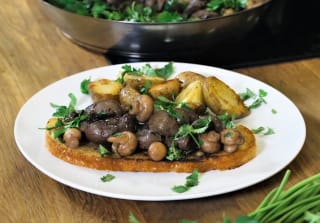
Почки в мадере

,1925
Madeira is mentioned indirectly by the food-loving Feldoberkurat Lacina when he talks about kidneys à la Madeira on the train from Budějovice to Királyhida.
The night before he had been served this dish in the officer's casino in Budějovice and was very satisfied. The chef was a teacher from Skuteč and Lacina mentions this as an example of how preparing food requires intelligence.
On another occasion he had been served the same dish at the officer's dining room of k.k. Landwehrinfanterieregiment Nr. 64 but there the chef was someone who in civilian life fed cattle at a large estate. The result corresponded.
Background
Madeira is an island in the Atlantic that belongs to Portugal but in The Good Soldier Švejk it is only indirectly referred to via a dish.
Kidneys in Madeira sauce
Kidneys in Madeira sauce is a Russian dish, mostly used as a starter[a]. The Russian name for it is Почки в мадере and a French variation is called Rognons de Veau. The Madeira sauce itself is of French origin and such named because Madeira wine is one of the ingredients.
Quote(s) from the novel
[II.3] Bez inteligence může člověk žít v obyčejném nějakém zaměstnání a v životě, ale při kuchyni je to znát. Včera večer v Budějovicích v důstojnickém kasině podali nám mezi jiným ledvinky a la madeira. Kdo je dělal, tomu odpusť bůh všechny hříchy, to byl pravý inteligent, a také opravdu je v kuchyni tamější důstojnické menáže nějaký učitel ze Skutče. A tytéž ledvinky a la madeira jedl jsem v důstojnické mináži 64. landwehrregimentu. Dali do nich kmín, jako když se dělají v obyčejné hospodě na pepři. A kdo je dělal, čím byl ten kuchař v civilu? Krmič dobytka na jednom velkostatku.“
| a | Kidneys in Madeira Sauce |
|
| Skuteč | | |||
| |||||
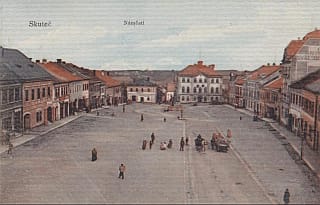
Skuteč náměstí, 1912

,1905
Skuteč appears when Feldoberkurat Lacina reports in glowing terms about the excellent kidneys à la Madeira he had enjoyed at the officer's mess in Budějovice the day before. Such a great kidney dish, he insists, must have been prepared by a true intellectual, and it happened to a prepared by a teacher from Skuteč.
Background
Skuteč is a small town in the Pardubice region of Czechia, with around 5,000 inhabitants.
Demography
According to the 1910 census Skuteč had 4,345 inhabitants of which 4,330 (99 per cent) reported that they used Czech in their daily speech. The judicial district was okres Skuteč, administratively it reported to hejtmanství Vysoké Mýto.
Source:Seznam míst v království Českém(1913)
Military
In accordance with the recruitment districts infantrymen from Skuteč were usually assigned to Infanterieregiment Nr. 98 (Hohenmauth) or k.k. Landwehrinfanterieregiment Nr. 30 (Hohenmauth).
Quote(s) from the novel
[II.3] Bez inteligence může člověk žít v obyčejném nějakém zaměstnání a v životě, ale při kuchyni je to znát. Včera večer v Budějovicích v důstojnickém kasině podali nám mezi jiným ledvinky a la madeira. Kdo je dělal, tomu odpusť bůh všechny hříchy, to byl pravý inteligent, a také opravdu je v kuchyni tamější důstojnické menáže nějaký učitel ze Skutče. A tytéž ledvinky a la madeira jedl jsem v důstojnické mináži 64. landwehrregimentu.
Also written:Skutschde
|
| Hodonín | | |||
| |||||
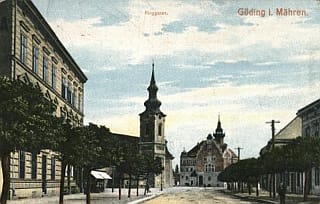
Hodonín, 1912
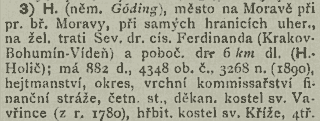
, 1897
Hodonín appears in a verse Švejk sings for Feldoberkurat Lacina on the train journey to Bruck. The theme is some Marína, a priest and a keg of wine. The field chaplain does not get angry despite the verse's suggestion of immorality amongst the clergy.
Background
Hodonín is a town in Moravia, best known as the birthplace of Professor Masaryk, from 1918 president of Czechoslovakia. It is situated in the south-eastern corner of Moravia, on the border with Slovakia.
See Marína for information about the song where the town is mentioned.
Demography
According to the 1910 census Hodonín had 12 197 inhabitants. The judicial district was okres Hodonín, administratively it reported to hejtmanství Hodonín.
Military
In accordance with the recruitment districts infantrymen from Hodonín were usually assigned to Infanterieregiment Nr. 3 (Kremsier) or k.k. Landwehrinfanterieregiment Nr. 25 (Kremsier).
Quote(s) from the novel
[II.3] Ide Marína od Hodonína, za ní pan farář s bečicú vína.
Also written:Gödingde
|
| Emmental | | |||
| |||||
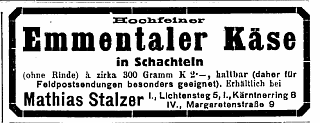
,20.5.1915
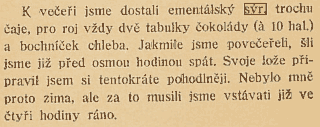
Na vojně v Karpatech a Haliči, ,1917
Emmental is first mentioned indirectly by Feldoberkurat Lacina through the term Emmental cheese. On the train to Bruck, shortly before Vienna, he isnstructs Švejk om how to pick the best pieces.
In [III.2] the cheese plays a more prominent rile as in Budapest the men were promised 15 decagrammes of cheese that was to be handed out in Gödöllő. Hauptmann Ságner is requesting this, on behalf of his men, from the commander of the military railway station in Budapest, a major.
Background
Emmental is a valley in the Bern canton in Switzerland, named after the river Emme. It is best known for a hard cheese made from cow milk.
Emmental was not a protected denomination so the cheese in question probably came from Austria-Hungary. In the advert to the right 30 decagrammes are on offer, so durable that it can even be dispatched by Feldpost.
Hašek and Emmentaler
Jaroslav Hašek introduced Emmental cheese already in his poem Road to the battlefield from 1915. It was written down by Jan Vaněk in his diary and first published by Jan Morávek after the war[a]. Here Hašek reveals that his march battalion were given Emmental cheese in Pest, unlike Švejk's who were promised it here but had to wait.
Quote(s) from the novel
[II.3] Bude-li se fasovat ementálský sýr, tak se postarejte, aby vám nedali z kraje, a uherský salám, tak žádnou špičku, pěkně ze středu, aby byl vláčný.
[III.2] „Pane majore,“ otázal se hejtman Ságner velitele vojenského nádraží, „dle rozkazů pluku, dle maršrúty jedeme do Gödölö. Mužstvo má zde dostat 15 deka ementálského sýra. Na poslední zastávce mělo mužstvo dostat 15 deka uherského salámu. Ale nedostalo ničeho.“
Sources: ÖNB, Morávek, wikipedia.de
Also written:Ementálcz
| a | Jaroslav Hašek - dobrý voják Švejk | 12.9.1924 |
|
| Pohořelec | | |||
| |||||
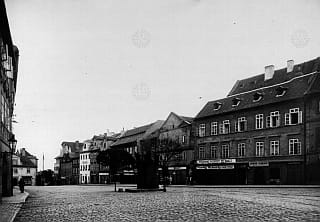
Pohled na jižní stranu náměstí Pohořelec s domy čp. 146, 147, 148, 149, 150...(zprava) na Hradčanech, 21.7.1929
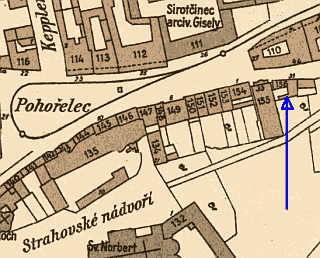
Krásná vyhlídka indicated.
,1909-1914
Pohořelec is mentioned when Švejk retells a story he had heard from a soldier who had reported sick by Przemyśl. During a bayonet charge he faced a huge Russian with a drop under his nose. When seeing the nosedrop he felt unwell and was carried to Hilfsplatz. From here was dispatched to some cholera barracks in Pest where he actually contracted cholera! When recuperating in Prague the soldier told his story in the restarurant na Vyhlídce at Pohořelec and this is where Švejk picked it up.
Background
Pohořelec is a street in the upper part of Hradčany, previously classed as an area. It has its name because it burnt down twice in medieval times. The current street stretches from the former Landwehr barracks down to Loretánské náměstí.
The barracks here were most of the time used by k.k. Landwehrinfanterieregiment Nr. 8. It can also be added that Karl Schlager, the real-life model of Oberst Schröder, was born at Pohořelec in 1859.
Memoriál Matěje Kuděje
Pohořelec is also the starting point of the oldest Švejk-related event in the Czech Republic. Memoriál Matěje Kuděje is a theme pub-crawl in the honor of both Zdeněk Matěj Kuděj and Jaroslav Hašek. The tradition goes back to 1994.
Quote(s) from the novel
[II.3] „Někdy,“ řekl Švejk, „se zas v gefechtu člověku udělá špatně, člověk si něco zvoškliví. Vypravoval v Praze na Pohořelci na ,Vyhlídce’ jeden nemocnej rekonvalescent od Přemyšlu, že tam někde pod festungem přišlo k útoku na bajonety a proti němu se vobjevil jeden Rus, chlap jako hora, a mazal si to na něho s bajonetem a měl pořádnou kapičku u nosu. Jak se mu von podíval na tu kapičku, na ten vozdr, že se mu hned udělalo špatně a musel jít na hilfsplac, kde ho uznali zamořenýho cholerou a odpravili do cholerovejch baráků do Pešti, kde se taky vopravdu nakazil cholerou.“
Literature
|
| Pest | | |||
| |||||
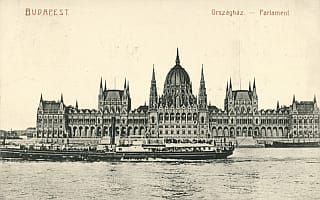
Országház, the Hungarian Parliament, 1906.
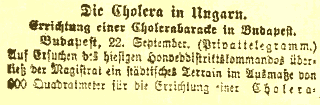
,23.9.1910
Pest is mentioned when Švejk retells a story he had heard from a soldier who had reported sick by Przemyśl. During a bayonet charge he faced a huge Russian with a drop under his nose. When seeing the nosedrop he felt unwell and was carried to Hilfsplatz. From here was dispatched to some cholera barracks in Pest where he actually contracted cholera! When recuperating in Prague the soldier told his story in the restarurant na Vyhlídce at Pohořelec and this is where Švejk picked it up.
Background
Pest is the part of Budapest located on the eastern bank of the Danube. It is the administrative centre of Hungary, newer and more densely populated than Buda on the western bank. Pest was in 1914, apart from Vienna, the most important centre of power in the Dual Monarchy. It was an autonomous city until it was merged with Buda and Óbuda in 1873.
Cholerabarracks
In 1910 it was decided to build a new cholera barrack in Budapest but it is not known if it was in Buda or in Pest[a]. During the war Nachricthen über Verwundete und Verletzte frequently referrred to cholera barracks in Miskolc but rarely elsewhere[b].
Military
In accordance with the recruitment districts infantrymen from Pest were usually assigned to Infanterieregiment Nr. 32 (Budapest) or Honvédinfanterieregiment Nr. 1 (Budapest).
Quote(s) from the novel
[II.3] „Někdy,“ řekl Švejk, „se zas v gefechtu člověku udělá špatně, člověk si něco zvoškliví. Vypravoval v Praze na Pohořelci na ,Vyhlídce’ jeden nemocnej rekonvalescent od Přemyšlu, že tam někde pod festungem přišlo k útoku na bajonety a proti němu se vobjevil jeden Rus, chlap jako hora, a mazal si to na něho s bajonetem a měl pořádnou kapičku u nosu. Jak se mu von podíval na tu kapičku, na ten vozdr, že se mu hned udělalo špatně a musel jít na hilfsplac, kde ho uznali zamořenýho cholerou a odpravili do cholerovejch baráků do Pešti, kde se taky vopravdu nakazil cholerou.“
Also written:Pešťcz
| a | Die Cholera in Ungarn | 23.9.1910 | |
| b | Nr. 424 | 13.5.1915 |
|
| Vienna | | |||||
| |||||||
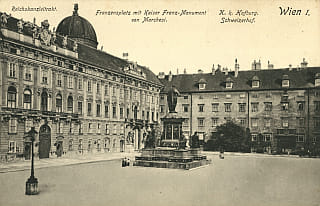
K. k. Hofburg, Reichskanzleitrakt; Kaiser Franz-Monument, 1916
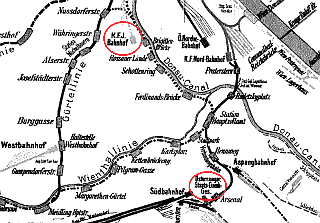
The railway network around 1905
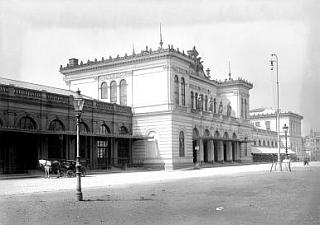
Ostbahnhof, until 1914 Staatsbahnhof
,1915
Vienna is mentioned 54 times in The Good Soldier Švejk.
Vienna appears several times in the story, and mentioned first in [I.1] during the conversation at U kalicha. The city is mentioned 8 times in the first chapter.
The plot briefly takes place here when the train with Ersatzbataillon IR. 91 stops at a railway station in Vienna on the way from Budějovice to Királyhida. Here Švejk finally gets back to Oberleutnant Lukáš after he has been permitted to leave the arrest wagon to provide food for the gluttonous Feldoberkurat Lacina. The narrative from Vienna contains some observations from the author where he relates how the atmosphere now has turned gloomy after the initial euphoria at the outbreak of war.
Background
Vienna is the capital of Austria and one of the nine states in the federation. In March 2004 the city had a population of more than 1.6 million. The river Danube flows through the northern outskirts of the city.
The city was the capital of Austria-Hungary during the whole existence of the Dual Monarchy. The Emperors of the House of Habsburg held court in the palaces of Hofburg and Schönbrunn and the declaration of war on Serbia was issued from Vienna.
IR. 91 through Wien
No station names are mentioned in The Good Soldier Švejk but Josef Novotný's diary reveals that Ersatzbataillon IR. 91 passed the city in late evening on 1 June 1915 on the way from Budějovice to Királyhida [a]. They were provided a meal at Franz-Josefs Bahnhof and they passed several stations after this. Only at 2 AM the next morning did they arrive in Bruck. More details are presented in the entry a railway station in Vienna.
The good soldier Švejk in captivity
In Dobrý voják Švejk v zajetí Vienna is mentioned because Švejk travels through on the way to the internment camp at Thalerhof by Graz. In Vienna some German women with sqeaky voices shouted: "Nieder mit den Serben!" Švejk also enjoyed a stay at some madhouse in the city. Vienna is mentioned 16 times (includes adjective forms). Otherwise Tegethoff is mentioned and also some Ryptaschek.[1]
Ve Vídni se s jich transportem přihodil malý omyl. Jejich vagón přidali v Benešově k vojenskému vlaku vezoucímu vojáky na srbské bojiště. Německé paní házely i do jejich vagónu květiny a písklavými hlasy křičely: "Nieder mit den Serben!"
Druhý den odvezli Švejka do Vídně k pozorování na psychiatrickou kliniku.
Demography
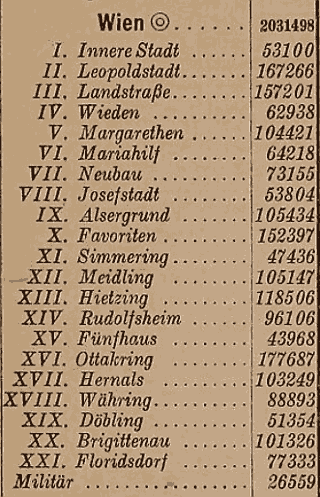
According to the 1910 census Vienna had 2 032 498 inhabitants. Thus it was by far the most populous city in the Dual Monarchy. It consisted of 21 Bezirke (districts)[b].
Military
In accordance with the recruitment districts infantrymen from Vienna were usually assigned to Infanterieregiment Nr. 4 (Wien) or k.k. Landwehrinfanterieregiment Nr. 1 (Wien). In addition to IR. 4 (Hoch- und Deutschmeister) Infanterieregiment Nr. 84 was also recruited from the capital. The city had a large garrison and obviously also housed superior institutions like k.u.k. Kriegsministerium and k.k. Ministerium für Landesverteidigung. In total the armed forces employed more than 26,000 in the city.
Quote(s) from the novel
[I.1] Civilní strážník Bretschneider definitivně umlkl a jeho zachmuřený výraz se zlepšil teprve příchodem Švejka, který, vstoupiv do hospody, poručil si černé pivo s touto poznámkou: „Ve Vídni dneska taky mají smutek.“
[I.2] „Mne vůbec žádná vražda nezajímá, ať je třebas v Praze, ve Vídni, v Sarajevu nebo v Londýně.
[I.7] A tak v době, kdy Vídeň si přála, aby všichni národové Rakousko-Uherska dávali nejskvělejší příklady věrnosti a oddanosti, předepsal doktor Pávek Švejkovi proti jeho vlasteneckému nadšení brom a doporučoval statečnému a hodnému vojínu Švejkovi, aby nemyslil na vojnu.
[I.8] Psali poslancům do Vídně, aby se jich ujmuli, a ti začali dávat interpelaci jednu za druhou, že je náš pan obršt zvíře a podobně. Nějakej ministr poslal k nám komisi, aby to vyšetřila, a nějakej Franta Henčlů ze Hluboký dostal potom dva roky, poněvadž to byl ten, co se vobrátil do Vídně k poslancům kvůli tý facce, kerou dostal na cvičišti od pana obršta.
[I.10.2] Počal se hlasitě smát, ale za chvíli zesmutněl a apaticky se díval na Švejka pronášeje: „Dovolte, pane, já vás již někde viděl. Nebyl jste ve Vídni? Pamatuji se na vás ze semináře.“
[I.11.2] Slavný polní oltář byl od jedné židovské firmy, Moritz Mahler ve Vídni, která vyráběla všemožné mešní potřeby a předměty náboženské, jako růžence a obrázky svatých.
[I.14.5] Turci se drží dobře," odpověděl nadporučík, uváděje ho opět ke stolu, "předseda turecké sněmovny Hali bej a Ali bej přijeli do Vídně.
[II.1] Landverák si odplivl: „U nás v Čáslavi byl jeden redaktor z Vídně, Němec. Sloužil jako fähnrich. S námi nechtěl česky ani mluvit, ale když ho přidělili k maršce, kde byli samí Češi, hned uměl česky.“
[II.2] Je profous doma? On spí, hochu, klidně, zde armády je těžiště, než nový befel přijde opět z Vídně, že ztraceno je celé bojiště.
[II.2] Mladý Dauerling po hrozném zápase s čtyřmi třídami nižší reálky, které vystudoval soukromě, přičemž předčasně zešedivěl a zblbl jeho domácí učitel a druhý chtěl skočit v zoufalství se svatoštěpánské věže ve Vídni, přišel do hainburské kadetní školy.
[II.2] Teď vydali ve Vídni ,Zápisník jednoročního dobrovolníka’ a tam je tento úchvatný verš v českém překladě:...
[II.3] "A teď si do Vídně ještě drobátko schrupnu," řekl vrchní polní kurát, "a přeji si, abyste mne probudili, jakmile přijedeme do Vídně.
[II.3] "Oběd bude až ve Vídni, pane feldkurát," přihlásil se ke slovu desátník.
[II.3] Blížili se k Vídni. Ti, kteří nespali, pozorovali z okna drátěné překážky a opevnění u Vídně, což vyvolalo patrně v celém vlaku pocit jisté stísněnosti.
[II.3] Vídeň je vůbec důležité město,“ pokračoval, „jenom co mají divokejch zvířat v tej schönbrunnskej menažerii. Když jsem byl před lety ve Vídni, tak jsem se nejradši chodil dívat na vopice, ale když jede nějaká osobnost z císařskýho hradu, tak tam nikoho nepouštěj přes kordon. Byl se mnou jeden krejčí z desátýho okresu a toho zavřeli, poněvadž chtěl mermocí ty vopice vidět.“.
[II.3] Jestli ozýval se ještě neustále z vagónů řev skopčáků od Kašperských Hor: "Wann ich kumm, wann ich kumm, wann ich wieda, wieda kumm," nyní umlkl pod nepříjemným dojmem ostnatých drátů, kterými byla Vídeň zadrátována.
[II.3] Uvítání ve Vídni sestávalo ze tří členkyň spolku Rakouského červeného kříže a ze dvou členkyň nějakého válečného spolku vídeňských paní a dívek, jednoho oficielního zástupce vídeňského magistrátu a vojenského zástupce. Na všech těch tvářích bylo vidět únavu. Vlaky s vojskem jezdily dnem i nocí, sanitní vozy projížděly s raněnými každou hodinu, na nádražích přehazovali s koleje na druhou kolej každou chvíli vozy se zajatci a při všem tom museli být členové těch všech různých korporací a spolků. Šlo to ze dne na den a původní nadšení měnilo se v zívání. Střídali se v té službě a každý z nich, který se objevil na některém vídeňském nádraží, měl týž unavený výraz jako ti, kteří očekávali dnes vlak s budějovickým plukem.
[II.3] „Zde v hotelích to nepůjde, budu ji muset zatáhnout do Vídně,“ pomyslil si ještě nadporučík; „vezmu si komandýrovku.“
[II.3] ... sestřenice z otcovy strany že se vrhla ve Vídni z šestýho patra ...
Also written:VídeňczWiendeBécshu
Literature
| a | Z mých válečných pamětí | 2021 | |
| b | Allgemeines Verzeichnis der Ortsgemeinden und Ortsschaften Österreichs | 1915 | |
| 1 | Dobrý voják Švejk v zajetí | 1917 |
|
| X. Bezirk | | |||
| |||||
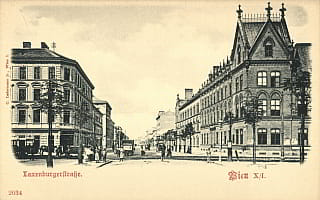
Wien, X/1., Laxenburgerstraße, vor 1907
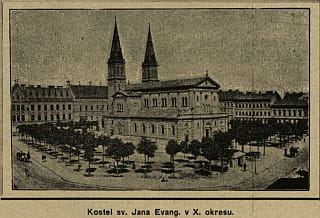
,1896
X. Bezirk is mentioned by Švejk when he on the train to Királyhida offers his thoughts on the capital. Together with a tailor from this district he had visisted Schönbrunner Menagerie to look at the monkeys.
Background
X. Bezirk refers to Vienna's 10th district, also known as Favoriten, one of the capital's 21 districts[a]. It is located south of the centre and hosted the two railway stations Ostbahnhof and Südbahnhof, and also Heeresmuseum. The district administration was located at Keplerplatz 5[c].
The district is now the most populous in Vienna and around 10 prosent of it's inhabitants live here. Keplerplatz is historically regarded as the centre of Favoriten. The two mentioned railway stations were at the beginning of the 21st century demolished and replaced by the modern Hauptbahnhof.
Before World War I Favoriten had a strong Czech presence as 23,847 reported Czech as their day-to-day language (Umgangssprache). The real number was probably a lot higher[b].
Demography
According to the 1910 census X. Bezirk had 152 397 inhabitants. This made it the fourth most populous district behind after XVI. Ottakring, II. Leopoldstadt and III. Landstrasse.
Quote(s) from the novel
[II.3] Vídeň je vůbec důležité město,“ pokračoval, „jenom co mají divokejch zvířat v tej schönbrunnskej menažerii. Když jsem byl před lety ve Vídni, tak jsem se nejradši chodil dívat na vopice, ale když jede nějaká osobnost z císařskýho hradu, tak tam nikoho nepouštěj přes kordon. Byl se mnou jeden krejčí z desátýho okresu a toho zavřeli, poněvadž chtěl mermocí ty vopice vidět.“.
Also written:10th Districten10. okrescz10. distriktno
Literature
| a | Allgemeines Verzeichnis der Ortsgemeinden und Ortsschaften Österreichs | 1915 | |
| b | Vídeň praktický rádce a průvodce | 1908 | |
| c | Lehmanns Wohnungs-Anzeiger Wien | 1915 |
|
| Királyhida | | |||||
| |||||||
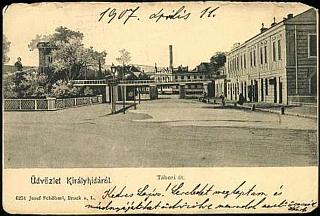
Tábori útca/Lagerstrasse, 1907

Ungarische Kaffeehaus in Királyhida
Királyhida is mentioned 23 times in The Good Soldier Švejk.
Királyhida plays a key role in the novel as roughly half the plot of Part Two and a little of the first chapter of Part Three takes place here and in Bruck an der Leitha, the twin town across the river. In total around one eight of the story in The Good Soldier Švejk is set in these twin towns.
The most famous episode occurs when Švejk and Sappeur Vodička botch an attempt to deliver a letter of admiration from Oberleutnant Lukáš to Etelka Kakonyi, the wife of an ironmonger in Soproni utca. The husband reads the letter and an almighty row erupts between Hungarians and Czechs. To protect his superior, Švejk first claims he has written the letter himself, and then swallows it to hide the evidence. It still turns into a major scandal, ending up in the local and national press, and with the ever unfortunate Švejk getting locked up once again.
The author also reveals his impressions both from the military camp and the twin towns: the omnipresent prostitution, the conditions for ordinary soldiers versus officers, widespread ethnic strife, rampant fraud, and a labyrinth of military bureaucracy.
Background
Királyhida is the Hungarian name of the town Bruckneudorf in the Austrian state of Burgenland. Only the river Leitha separates it from Bruck an der Leitha in Lower Austria. The river was before 1921 an even more important administrative divide; it separated the two parts of Austria-Hungary: Transleithanien and Cisleithania. Bruckneudorf was founded around the railway station (1846) and later grew considerably. In 1867, the authorities established the military training ground Brucker Lager here. After Ausgleich in 1867 it was, like the rest of Burgenland, ruled from Hungary. The town was renamed Királyhida in 1898, in line with the general policy of "magyarisation".
Changed spelling

Osudy dobrého vojáka Švejka za světové války, , 1921
Jaroslav Hašek consistently wrote Király Hida, but this has been "corrected" in later revisions of the novel. The spelling Király-Hida however appeared, but the town's name in one word was far more common and no doubt the official spelling. There are several more cases in The Good Soldier Švejk where geographical names have been changed in subsequent editions.
Demography
According to the 1910 census Királyhida had 1 034 inhabitants. The judicial district was Nezsider, administratively it reported to vármegye Moson.
Military
In accordance with the recruitment districts infantrymen from Királyhida were usually assigned to Infanterieregiment Nr. 76 (Sopron) or Honvédinfanterieregiment Nr. 18 (Sopron).
Tamás Herczeg, 4.11.2022
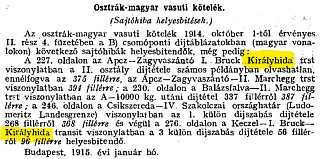
,15.1.1915
The official Hungarian name of Bruck an der Leitha was in 1915 Királyhida. Enclosed you will find a copy of the official Railway and transport gazette from 1915 (Királyhida vasút...). BUT! Hasek might be right, as some newspapers in German language mentioned Királyhida as Király hida or Király Hida. You can see one example of it in another enclosed document from 1915 that mentions Bartak Anton from Király hida among the names of fallen soldiers. kiralyhida.png
Quote(s) from the novel
[II.3] 3. ŠVEJKOVY PŘÍHODY V KIRÁLYHIDĚ
[II.3] Jednadevadesátý pluk se stěhoval do Mostu nad Litavou - Királyhidy.
[II.3] Most nad Litavou zářil, stejně jako na druhé straně za mostem svítila Királyhida, Cislajtanie i Translajtanie. V obou městech, uherském i rakouském, hrály cikánské kapely, zářily okna kaváren a restaurací, zpívalo se, pilo. Místní měšťáci i úřednictvo vodilo sem do kaváren a restaurací své paničky a dospělé dcery a Most nad Litavou, Bruck an der Leitha, a Királyhida nebyly nic jiného než jeden velký bordel.
[II.3] Major se opět vrátil k regimentu, když byla v Srbsku konstatována jeho úplná neschopnost na Drině. Mluvilo se o tom, že dal rozebrat a zničit pontonový most, když měl ještě půl svého batalionu na druhé straně. Nyní byl přidělen k vojenské střelnici v Királyhidě jako velitel a měl také co dělat s hospodářstvím v táboře.
[II.3] Ani jsem nečekal na kafe a hned jsem šel z baráku do Királyhidy, a z toho vzteku jsem na nic jinýho nemyslel než najít si v městě nějakou tichou putyku, vožrat se tam a udělat tam kravál, dát někomu přes držku a jít vybouřenej domů.
[II.4] Potom přijedu sem do Királyhidy a udělám tady takový binec, že to svět neviděl a že se budou lidi schovávat do sklepa, až se dozvědí, že jsem se přišel podívat na ty rošťáky v Királyhidě, na ty lumpy, na ty pacholky.
Sources: Josef Novotný, Jan Morávek, Bohumil Vlček, Klara Köttner-Benigni, Tamás Herczeg
Also written:Király HidaHašekBruckneudorfde
Literature
- Die „Abenteuer des Braven Soldaten Schwejk” in Österreich1983
- Kde to bylo6.4.1983
- Bruck und Kiralyhida9.3.1902
|
| Bruck an der Leitha | | |||||
| |||||||
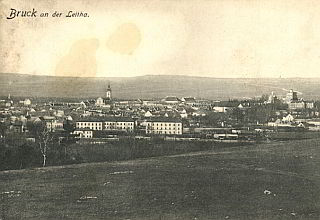
Bruck an der Leitha, 1909
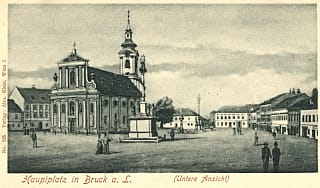
Bruck an der Leitha, Hauptplatz, vor 1905
Bruck an der Leitha is mentioned 37 times in The Good Soldier Švejk.
Bruck an der Leitha plays a crucial role in the novel as roughly one eight of the plot takes place here and in the Hungarian twin town Királyhida.
Background
Bruck an der Leitha is a town by the river Leitha in Lower Austria. Only the river separates it from Bruckneudorf (until 1921 Királyhida) in Burgenland. The river was at that time an even more important administrative divide than now; it separated the two parts of the Dual Monarchy, Cisleithania and Transleithanien.
The two towns are often confused, and for understandable reasons. It is and was one single conurbation and both Bruck-Királyhida pályaudvar and Brucker Lager were actually located in Királyhida. The latter was originally a mere suburb of Bruck but the two places became separated when Ausgleich resulted in a new state border between them.
IR. 91 and Hašek in Bruck-Királyhida
According to newspaper reports Ersatzbataillon IR. 91 was transferred to Bruck an der Leitha - Királyhida on 1 June 1915[a]. The staff of the replacement battalion was located in Schloss Prugg, and the men were lodged in wooden barracks in Brucker Lager across the Leitha in Királyhida[b].
Jaroslav Hašek was one of the soldiers who was transferred, exactly as described in the novel. He was assigned to the XII. Marschbataillon which consisted of four march companies. His company commander was Rudolf Lukas, the march battalion was commanded by Franz Wenzel. The march battalion departed for the front 30 June 1915, at 8:15 PM[a].
Hašek reportdely tried to avoid the departure and went missing for three days. During the month here he was often drunk and was from time to time arrested and brought to Hauptwache to sober up[c].
Military
In accordance with the recruitment districts infantrymen from Bruck an der Leitha were usually assigned to Infanterieregiment Nr. 84 (Wien) or k.k. Landwehrinfanterieregiment Nr. 1 (Wien).
Quote(s) from the novel
[II.3] Jednadevadesátý pluk se stěhoval do Mostu nad Litavou - Királyhidy.
[II.3] Místo něho odpověděl dobrácky Švejk: "Do Brucku nás vezou, jestli chtějí, pane obrfeldkurát, můžou ject s námi."
[II.3] Švejk přistoupil k páteru Lacinovi, obrátil ho ke stěně a znalecky řekl: "Ten bude chrnět až do Brucku," a vrátil se na své místo, provázen zoufalým pohledem nešťastného desátníka, který poznamenal: "Abych to šel snad oznámit".
[II.3] "Švejk Josef, poslušně hlásím, pane lajtnant " "Ehm, vy jste tedy ten známý Švejk," řekl doktor Mráz, "vy jste měl opravdu vyjít o jedenácté. Ale pan nadporučík Lukáš mne žádal, abych vás nepouštěl až v Brucku, je prý to bezpečnější, alespoň na cestě nic nevyvedete."
[II.3] Posadil se opět se slovy: "Kam to vlastně jedeme?" "Do Brucku, poslušné hlásím." "A proč jedeme do Brucku?" "Poslušné hlásím, že je tam přeloženej náš celej jednadevadesátej regiment". Páter počal opět úsilovně přemýšlet, co se to vlastně s ním stalo, jak se dostal do vagónu a proč vlastně jede do Brucku a právě s jednadevadesátým regimentem v průvodu nějaké eskorty.
[II.3] Nad vojenským táborem v Mostě panovalo noční ticho. V barácích pro mužstvo třásli se vojáci zimou a v důstojnických barácích otvírali okna, poněvadž bylo přetopeno. Od jednotlivých objektů, před kterými stály stráže, ozývaly se občas kroky hlídky, která si plašila chůzí spánek. Dole v Mostě nad Litavou zářily světla z c. k. továrny na masité konservy, kde se pracovalo dnem i nocí a zpracovávaly se různé odpadky. Poněvadž šel odtud vítr do alejí ve vojenském táboře, šel sem smrad z hnijících šlach, kopyt, paznehtů a kostí, které vařili do polévkových konserv.
Sources: Josef Novotný, Jan Morávek, Bohumil Vlček, Klara Köttner-Benigni, Wolfgang Gruber
Also written:Most nad LitavouczLajtabruckhu
Literature
- Die „Abenteuer des Braven Soldaten Schwejk” in Österreich1983
- Kde to bylo6.4.1983
- Bruck und Kiralyhida9.3.1902
- Großer militärischer Fackelzug in Bruck27.6.1915
- Die Vorstadt der Front1.9.1915
| a | Odchod 91. pluku | 2.6.1915 | |
| b | Z mých válečných pamětí | 2021 | |
| c | Jaroslav Hašek - dobrý voják Švejk | Jan Morávek | 1924 |
| d | Válečný deník Jana Vaňka | 2014 |
|
| Leitha | | |||||
| |||||||
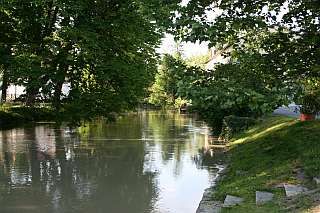
Cisleithania to the left, Transleithanien to the right. 2010.
Leitha is part of the story as the larger part of the plot in Part Two takes part in Királyhida and Bruck, towns situated on opposite banks of the river.
Background
Leitha is a 180 km long river that flows through parts of Austria and Hungary. It empties into Danube near Mosonmagyaróvár.
The otherwise insignificant river gave in the times of Austria-Hungary rise to the expressions Cisleithania and Transleithanien, a fact that Hašek explains in the novel. Seen from Vienna, Cisleithania was the land this side of the Leitha, while Transleithanien was the land beyond. In daily speech the terms were synonymous with the Austrian and Hungarian parts of the monarchy respectively.
Quote(s) from the novel
[II.3] Od opuštěného pavilónku, kde dřív za času míru fotografoval nějaký fotograf vojáky trávící zde mládí na vojenské střelnici, bylo vidět dole v údolí u Litavy červené elektrické světlo v bordelu „U kukuřičného klasu“, který poctil svou návštěvou arcivévoda Štěpán při velkých manévrech u Šoproně v roce 1908 a kde se scházela denně důstojnická společnost.
[II.3] Tam u řeky až mezi zahradami našel jsem vopravdu takovej lokál, tichej jako kaple, jako stvořenej pro kravál.
[II.3] A kdyby byl někdo v průjezdě a rozuměl česky, byl by zaslechl již že schodů hlasitěji pronesené Vodičkovo heslo "Ty Maďary neznáš...", heslo, ku kterému on došel v tichém lokále nad řekou Litavou, mezi zahradami slavné Királyhidy, obklopené vrchy, na které budou vojáci vzpomínat vždy s proklínáním při vzpomínkách na ty všechny übunky do světové války i za světové války, na kterých se cvičili teoreticky k praktickým masakrům a řežím.
[II.3] Co si troufá cizota v naší maďarské vlasti, o tom svědčí nejlépe případ v Királyhidé, maďarské výspě nad Litavou.
[II.4] Člověk míní, ale pánbůh mění. Tam u řeky až mezi zahradami našel jsem vopravdu takovej lokál, tichej jako kaple, jako stvořenej pro kravál.
Also written:LitavaczLajtahu
Literature
|
| Soproni utca | | |||||
| |||||||
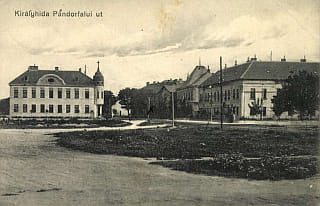
Királyhida Pándorfalui út

1983
Soproni utca No. 16 in Királyhida is the scene of the famous and ill-fated attempt by Švejk and Sappeur Vodička to deliverer the letter of admiration from Oberleutnant Lukáš to the enchanting Etelka Kakonyi. In this street Mr. Kakonyi owned an ironmonger's shop and lived with his wife on the first floor.
Background
Soproni utca was according to the narrative in The Good Soldier Švejk some street in Királyhida. There is however no historical evidence that such a street existed so one must assume that Hašek invented the name or had another street in mind.
Whether an ironmonger's shop actually existed in Királyhida is not known, but in Bruck there was at least one such enterprise[a].
The good soldier Švejk in captivity
In the short novel Dobrý voják Švejk v zajetí (1917) he lets the Kakonyi couple live in Pozsony utca 13, another street that didn't exist. Here Mr. Kakonyi is the owner of a stationary shop. This there is every reason to believe that the author in both books invented both the street names and the numbers.[1]
Švejk nalévat koňak, který je tak důležitou oporou politické psychologie němectví. Pak Dauerling napsal nějaké psaní a odevzdal je Švejkovi s rozkazem, že musí hledět to psaní doručit za jakýchkoliv okolností a čekat na odpověď. Adresa zněla: Királyhida, Pozsony utca 13, Etelka Kakonyi.
Quote(s) from the novel
[II.3] Sedněte si, Švejku, a nechte si to ,dle rozkazu’. Držte hubu a dávejte dobrý pozor. Víte, kde je v Királyhidě Sopronyi utcza? Nechte si pořád to vaše: Poslušně hlásím, pane obrlajtnant, že nevím. Nevíte, tak řekněte nevím, a basta. Napište si na kousek papíru: ,Sopronyi utcza, č.16’. V tom domě je železářský krám.
[II.3] Obdržel informace od garderobierky, že jsou to manželé Kákonyiovi, pán že má na Sopronyi utcza čís. 16 železářský závod.
[II.3] Nadporučík zabalil se opět do deky, ze které ho Švejk vytáhl, a spal dál, zatímco Švejk putoval dál do Királyhidy. Najít Sopronyi utczu čís. 16 nebylo by bývalo tak těžké, kdyby ho náhodou nebyl potkal starý sapér Vodička, který byl přidělen k „štajerákům“, jejichž kasárna byla dole v lágru. Vodička bydlíval před léty v Praze na Bojišti, a proto při takovém setkání nezbylo nic jiného, než že oba zašli do hospody „U černého beránka“ v Brucku, kde byla známá číšnice Růženka, Češka, které byli všichni čeští jednoročáci, kteří kdy byli v lágru, nějaký obnos dlužni.
[II.3] Vodička po celé cestě do Sopronyi utcza čís. 16 projevoval ohromnou nenávist vůči Maďarům a vypravoval neustále, jak se všude s nimi pere, kde se všude a kdy s nimi sepral a co mu kdy a kde zabránilo, aby se s nimi nepopral.
[II.3] Za tohoto poutavého a poučného rozhovoru našel Švejk s Vodičkou konečně železářský krám pana Kákonyie na Sopronyi utcza čís. 16.
Sources: Klara Köttner-Benigni, Konrad Biricz
Also written:Sopronyi utcza/Šopronyi utczaHašek
Literature
- Kde to bylo6.4.1983
| a | Die „Abenteuer des Braven Soldaten Schwejk” in Österreich | 1983 | |
| 1 | Dobrý voják Švejk v zajetí | 1917 |
|
| Pausdorf | | ||||
| ||||||
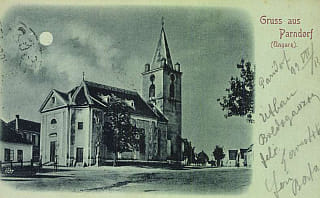
Parndorf, 13.7.1899
Pausdorf is mentioned by Sappeur Vodička when he tells Švejk that he was about to beat up a certain Landwehrsoldat Purkrábek from k.k. Landwehrinfanterieregiment Nr. 16 because he mistook him for a Hungarian.
Background
Pausdorf is said to have been a village where the engineering soldiers went for wine. The only identified Pausdorf is however in Bavaria so this is probably a mix-up with Parndorf (hu. Pándorfalu), a town between Bruck an der Leitha and Neusiedler See. The town was at the time predominantly Croatian and was no typical wine village, so it's not entirely obvious.
Podersdorf is on the other hand a wine village and is phonetically more similar to Pausdorf but weighing against this hypothesis is that is is much further from Királyhida than Parndorf is.
Military
In accordance with the recruitment districts infantrymen from Parndorf were usually assigned to Infanterieregiment Nr. 76 (Sopron) or Honvédinfanterieregiment Nr. 18 (Sopron).
Quote(s) from the novel
[II.3] „Jednou ti už takovýho kluka maďarskýho držím za chřtán v Pausdorfě, kam jsme šli my saperáci na víno, a chci mu dát jednu überšvunkem přes kokos v tý tmě, poněvadž jsme hned, jak to začlo, praštili láhví do visací lampy, a von najednou začne křičet: ,Tondo, dyť to jsem já, Purkrábek, vod 16. landwehr!’
Literature
|
| Neusiedler See | | |||
| |||||
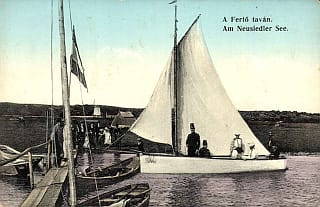
Neusiedler See, 16.6.1910
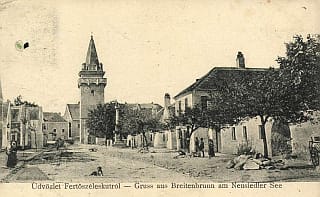
Breitenbrunn is a possible scene of the huge brawl between Czech and Hungarian soldiers by Lake Neusiedl.
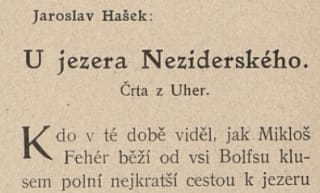
Světozor,17.11.1905
Neusiedler See is first mentioned by Sappeur Vodička when he tells Švejk about a fight between Czech and Hungarian soldiers in a village near the lake. In chapter [II.5] Rechnungsfeldwebel Vaněk also mentions the lake when he tells Oberleutnant Lukáš that soldiers from Brucker Einjährigfreiwilligenschule had got lost during a night exercise and had ended in the mud by the shore.
Background
Neusiedler See is a large and shallow lake which straddles the border of Austria and Hungary. Jaroslav Hašek wrote several short stories from the area in 1905, amongst them one that was simply called By Lake Neusiedl[c]. At the time the whole lake lay on Hungarian territory.
Breitenbrunn
The village by the sea that Vodička refers to is not mentioned by name but Klara Köttner-Benigni presents a well-founded theory about what may have inspired Hašek when he wrote this sequence of The Good Soldier Švejk. In Breitenbrunn there was an inn that suits Vodička's description in an anecdote he tells Švejk in Királyhida. The place in question was the commmunity hall, also known as Großes Wirtshaus, now Die Prangerschenke[a] and is still operating (2023). Supporting this theory is that such large pubs were uncommon in the area and that Breitenbrunn is located relatively close to Brucker Lager. The neighbouring village Winden am See would also be a candidate.
On the web page of Prangerschenke it is stated that "it is assumed that this is where the big brawl in The Good Soldier Švejk took place"[b].
Die Prangerschencke
Es wird vermutet, dass sich auch die Wirtshausrauferei des „Braven Soldaten Schweik“ von Jaroslav Hasek in diesem ehrwürdigen Gemäuer abgespielt hat, in der die tschechischen Soldaten Ihre ungarischen Kameraden kopfüber aus den Fenstern hängen haben lassen.
Quote(s) from the novel
[II.3] Málem by to byla bejvala mejlka. Zato jsme jim to tam, tajtrlíkům maďarským, vodplatili pořádně u Neziderskýho jezera, na který jsme se šli před třemi tejdny podívat. Leží tam ve vedlejší vsi nějaký oddělení strojních pušek nějakejch honvédů, a my jsme náhodou všichni zašli do jedný hospody, kde voni tančili ten svůj čardáš jako pominutý a roztahovali si držku na celý kolo se svým ,Uram, uram, biró uram’ nebo ,Láňok, láňok, láňok a faluba’.
[II.5] A to nevíte, pane obrlajtnant, že při tom posledním nachtübungu, o kterém jste vypravoval, einjährigfreiwilligenschule, která měla naši kumpačku obejít, dostala se až k Neziderskému jezeru? Mašírovala pořád pryč, až do rána, a vorposty se dostaly až do bahna. A vedl je sám pan hejtman Ságner.
Sources: Klara Köttner-Benigni
Also written:Lake NeusiedlenNeziderské jezeroczFertőhuNeusiedlersjøenno
| a | Die „Abenteuer des Braven Soldaten Schwejk” in Österreich | 1983 | |
| b | Die Geschichte der Prangerschencke | ||
| c | U jezera Nezíderského | Jaroslav Hašek | 17.11.1905 |
|
| Šaščín | | ||||
| ||||||
Hůla's unconvincing explanation
© LA-PNP
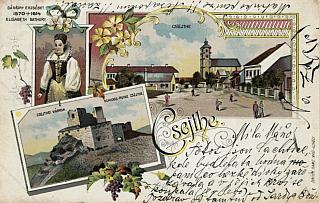
Hašek's postcard from 1.9.1901
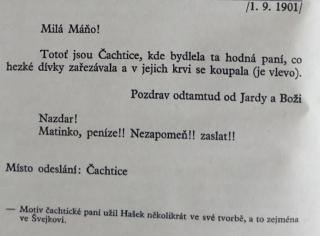
The text on Hašek's postcard
Lidský profil Jaroslava Haška, , 1978
Šaščín is mentioned indirectly through the term "the monster of Šaščín" in the story Švejk tells Sappeur Vodička about liquor trader Paroubek from Libeň.
Background
Šaščín is according to Břetislav Hůla the pilgrimage site Šaštín in the Nitra district in Slovakia but in an unconvincing manner he links it to the novel Šaščinká bestie by the Slovak author Jožo Nižnánsky. The catch is that this author never wrote any novel such named but rather one called Čachtická pani.
Elisabeth Báthory
The main character of the novel was the Hungarian duchess Elisabeth Báthory (hu. Báthori Erzsébet) (1560-1615) who is believed to have killed young women and then took baths in their blood to become beautiful. Nižnánsky's novel was however published in 1932 which is ten years after Hašek wrote this part of The Good Soldier Švejk. Despite all the confusion it is still obvious that both Břetislav Hůla and Švejk had Čachtice in mind.
Hašek in Čachtice
That Hašek was aware of Báthory is beyond doubt as he personally visited Čachtice. On 1 September 1901 he even dispatched a postcard from here where the bloodthirsty lady is pictured on the card and he also mentioned her directly.
Anna Darvulia from Šaštín
Jaroslav Šerák points to a study that reveals that Báthory didn't commit the misdeeds all on her own, that she had several women helping her. The most important of them was Anna Darvulia who actually was from Šaštín[a]. Despite being far less known than Báthory she was every bit as cruel and it may well be that Švejk knew about her and that Darvulia was his monster from Šaščín.
Eva Kozlová (2010)
Anna Darvuliová ze Šaštína (Darvulie) žila v Čachticích od roku 1594. Všichni svědci se shodli na tom, že právě ona na Alžbětu zhoubně působila, prý ji učila stále účinnější způsoby mučení. Zabývala se výrobou lektvarů, léčitelstvím a okultismem, praktikovala černou magii a údajně hraběnku léčila hypnózou. Stala se nejbližší rádkyní své paní, měla na ni obrovský vliv, byla jí neustále k dispozici a zajišťovala jí léčivé koupele, masáže a bylinné odvary, ale také přírodní drogy.
Quote(s) from the novel
[II.3] Potom ještě řekl Paroubkovi, že je huncút a šaščínská bestie, tak ho milej Paroubek chyt, votlouk mu jeho pastě na myši a dráty vo hlavu a vyhodil ho ven a mlátil ho po ulici tyčí na stahování rolety až dolů na Invalidovnu a hnal ho, jak byl zdivočelej, přes Invalidovnu v Karlíně až nahoru na Žižkov, vodtud přes Židovský pece do Malešic, kde vo něj konečně tyč přerazil, takže se moh vrátit nazpátek do Libně.
Sources: Břetislav Hůla, Jaroslav Šerák, Eva Kozlová
Also written:Csejtehu
Literature
- Konec dohadů o Alžbětě Báthory: Pravda vyplývá ze spisu
- Elisabeth Bathory, die "Blutgräfin"10.7.1904
- The Real Countess Dracula: 12 Facts about the Life and Crimes of Elizabeth Bathory1.9.2017
- Demonising Powerful Women: The Blood Countess27.2.2022
| a | Obraz Alžběty Báthory v historických románech | 2010 |
|
| Židovské pece | | |||
| |||||

,13.2.1905
Židovské pece appears in the story Švejk tells Sappeur Vodička about the liquor trader Paroubek who chased a Slovak across Karlín and Žižkov all the way to Malešice.
Background
Židovské pece is a park in the eastern part of Žižkov, towards Malešice. At Hašek's time it was a rural area. The origin av the name is according to some sources that Jews hid there during pogroms around 1744, during the reign Maria Theresa.
Quote(s) from the novel
[II.3] Potom ještě řekl Paroubkovi, že je huncút a šaščínská bestie, tak ho milej Paroubek chyt, votlouk mu jeho pastě na myši a dráty vo hlavu a vyhodil ho ven a mlátil ho po ulici tyčí na stahování rolety až dolů na Invalidovnu a hnal ho, jak byl zdivočelej, přes Invalidovnu v Karlíně až nahoru na Žižkov, vodtud přes Židovský pece do Malešic, kde vo něj konečně tyč přerazil, takže se moh vrátit nazpátek do Libně.
Also written:Jewish FurnacesParrottJewish KilnsSadlonJudenöfendeJødeomnaneno
|
| Neklanova ulice | | |||
| |||||
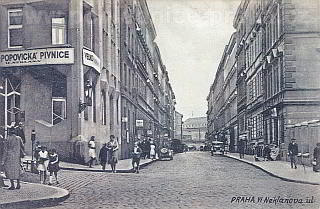
Pohled do Neklanovy ulice směrem severozápadním, kolem 1930
Neklanova ulice is mentioned in connection with the story about locksmith Voborník who was such a good man that he brought a drinking companion home. His wife did not approve though. This is a story that Švejk tells Sappeur Vodička to encourage him to keep a low profile during his assignment to deliver the letter to Etelka Kakonyi.
Background
Neklanova ulice is a street in Vyšehrad that stretches along the railway line in the Botič valley.
A tragic event
In the autumn of 1909 newspapers reported a grotesque event that took place in a pub at No. 80 in this street. The young electro-installer Jindřich Stepien shot himself in the mouth with revolver in full view of his comrades and other pub guests. Amongst them were three men describes as technicians, including a certain Jaroslav Hašek.
It is however unlikely that it was the author of The Good Soldier Švejk who observed the tragedy. The witness named Jaroslav Hašek is described as technician (or an engineering student), and it was reported that he lived in Ječná ulice. At the time our Hašek officially lived above Klamovka. On the other hand Hašek socialised a lot with engineering students but it appears strange that he would give the police a false address and also lie about his occupation. In any case there is no connection between the anecdote in the novel and the tragic suicide.
Quote(s) from the novel
[II.3] „Z toho tě, Vodičko, vyvedu. Víš, kde je na Vyšehradě Neklanova ulice? Tam měl dílnu zámečník Voborník. Byl to člověk spravedlivej a jednoho dne, když se vrátil domů z flámu, tak si s sebou přived ještě jednoho flamendra spát.
Literature
|
| Michle | | |||
| |||||
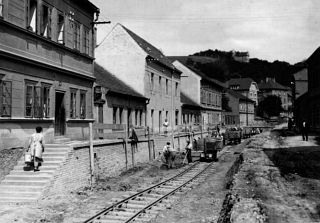
Průhled ulicí U plynárny v Michli při úpravě kolejí. Kol. 1920.
Michle is mentioned by Sappeur Vodička when he tells Švejk about a fight he took part in on Růžový ostrov.
Background
Michle was until 1922 a town on the outskirts of Prague which that year was incorporated in the capital. It is located south east of the centre, mostly in Prague IV. Neighbouring districts are Nusle, Podolí and Záběhlice.
Demography
According to the 1910 census Michle had 8,287 inhabitants of which 8,252 (99 per cent) reported that they used Czech in their daily speech. The judicial district was okres Nusle, administratively it reported to hejtmanství Královské Vinohrady.
Source:Seznam míst v království Českém(1913)
Military
In accordance with the recruitment districts infantrymen from Michle were usually assigned to Infanterieregiment Nr. 28 (Prag) or k.k. Landwehrinfanterieregiment Nr. 8 (Prag).
Quote(s) from the novel
[II.3] Ale nebál jsem se celýho ,Růžovýho ostrova’. Byli tam známí z Vršovic a ty mně pomohli. Ztřískali jsme asi pět rodin i s dětma. Muselo to bejt slyšet až do Michle a potom to taky bylo v novinách o tej zahradní zábavě toho dobročinnýho spolku nějakejch rodáků ňákýho města.
|
|
II. At the front |
| |
3. Švejk's happenings in Királyhida | |||
| © 2008 - 2024 Jomar Hønsi | Last updated: 17.5.2024 |